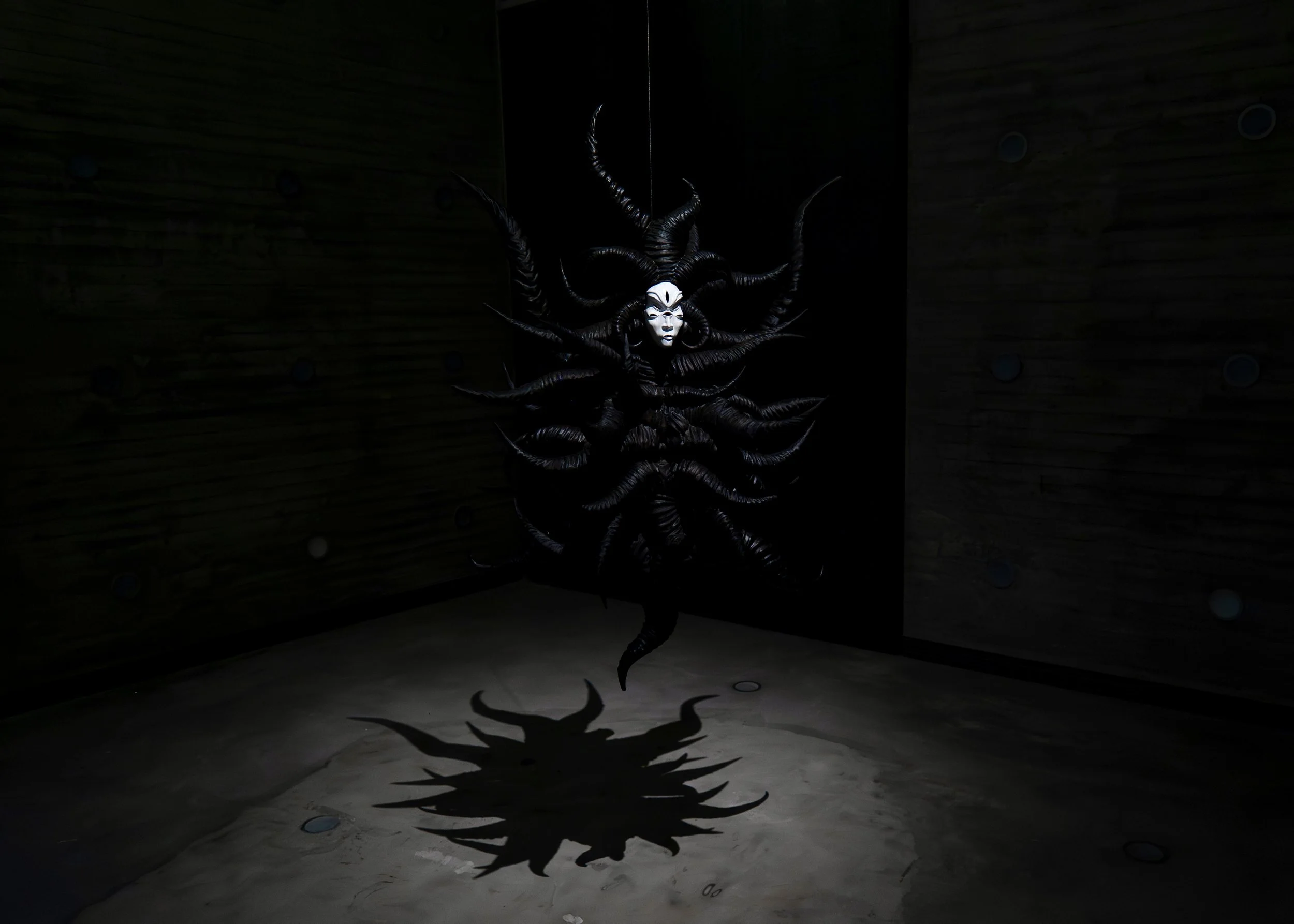
Splitting the Snakes Heart
Partir el Corazón de la Serpiente
This exhibition marks the first solo institutional presentation by Joshua Serafin
(Philippines/Belgium), bringing together recent and newly produced works that extend
their performance and dance-based practice into spatial and material forms. While
Serafin is widely known for live and ritualised performances, the works presented here
unfold across videos, objects, and environments, and making worlds, allowing
embodiment to persist and mutate in other registers. At the centre of this constellation
is Void (2023), a mesmerising piece in which movement and dreamy music composition
nourish shape to the conditions of both erasure and potential that structure queer
futurity beyond the epistemic violence of colonial modernity.
Serafin’s practice stems from a recognition that colonialism reorganised bodies as
much as territories, where skin became a primary surface of the regulation of race,
gender, sexuality, and moral worth. These systems did not merely govern forms of
representation, they produced the very conditions through which certain bodies could
appear as human, sacred, or disposable. In this context, skin becomes the place where
power is inscribed, but also where memory and resistance persist. Serafin’s figures
inhabit this tension. Their bodies are often bare, adorned, or luminous, creating charged
surfaces that shimmer and rebel.
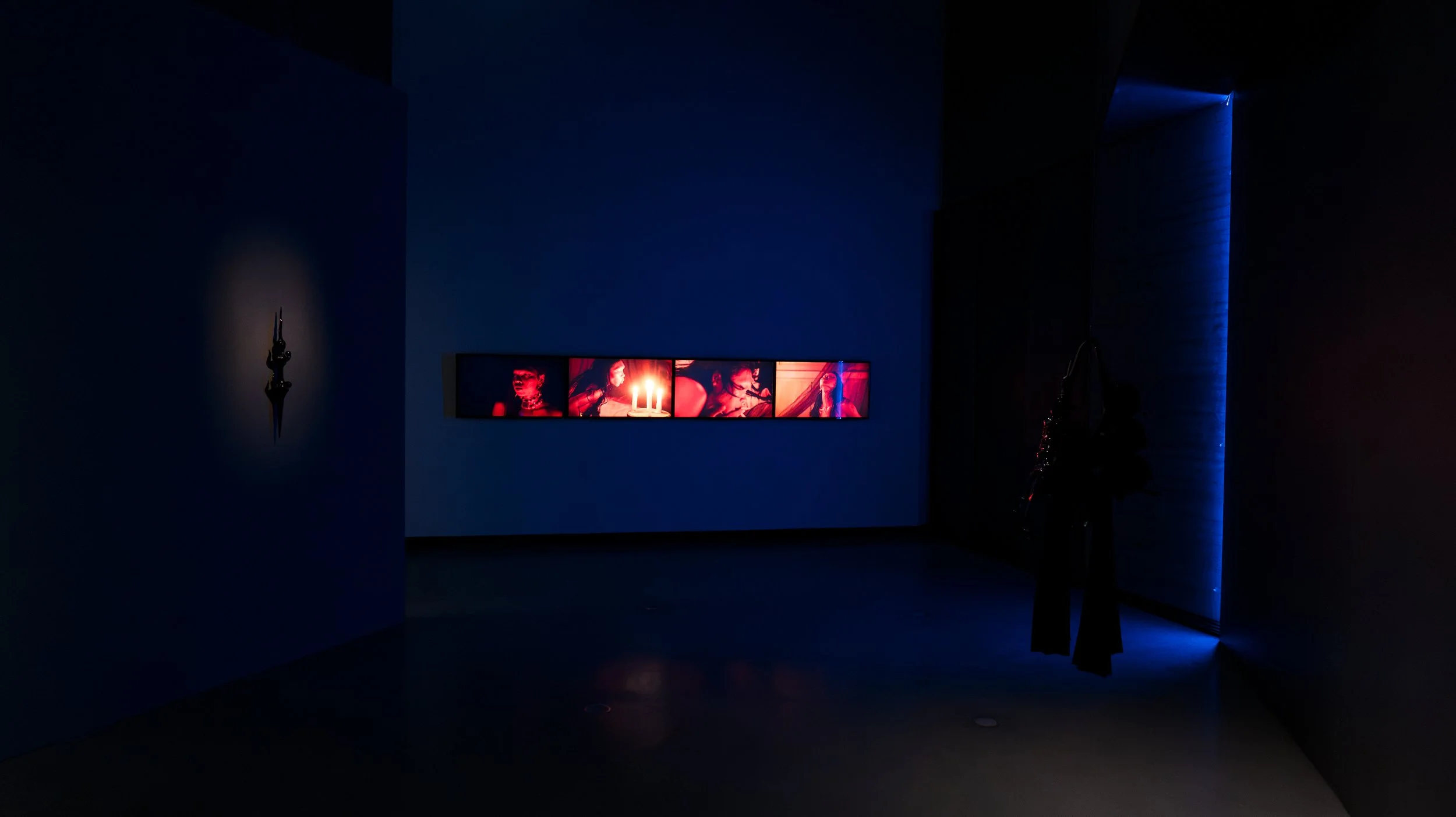
This kind of aesthetic catharsis is widely present in Void (2023), the central work of the
exhibition. Part of Serafin’s ongoing trilogy Cosmological Gangbang (2021–24), Void is
a portal to an interrupted cosmology. It evokes the state of absence to which colonised
bodies are often consigned, written out of history, denied futurity, yet it also names the
space in which something else might come into being. Anchored in dance vocabularies,
Void is not simply nothingness; it is a field of potential and a search for transcendence.
In this work, Serafin’s strong presence on the screen appears as a ghostly, non-binary,
brown-bodied deity and alter identity. Its body is exposed, radiant, and continually
shifting. Here, the body refuses to settle into recognisable forms of gender, race, or
selfhood. This formless instability is also a refusal of demand for binary coherence. To
remain unfixed is to remain ungovernable.
The bodily surface in Void glows, glistens, and appears at times almost liquid. This
luminosity is not cosmetic; it signals a body shaped by friction, ritual, trauma, and
desire. In Serafin’s work, shininess does not promise purity. It marks a body that has
survived exposure and now reflects the gaze onto the world. Its powerful body
movement and its choreography with a formless soil appear as if we are witnessing a
creation story of a lost humanity. A life cycle. It is simultaneously primordial and post-
apocalyptic.
Serafin situates this luminous figure within a cosmology informed by Indigenous
Filipino belief systems that predate Spanish colonisation, in which gender, spirituality,
and embodiment were fluid and interconnected. Before Catholic rule, many Indigenous
cultures in today’s Philippines recognised multiple genders and spiritual intermediaries
who moved between worlds. These belief systems were violently dismantled by colonial
Christianity, which replaced them with binary gender, moral discipline, and a theology of
the body as sinful and in need of regulation. Void does not attempt to reconstruct this
lost world. Instead, it imagines how those suppressed cosmologies might re-emerge in
mutated, queer, and futuristic forms. Forging bounds with a lost ancestry.
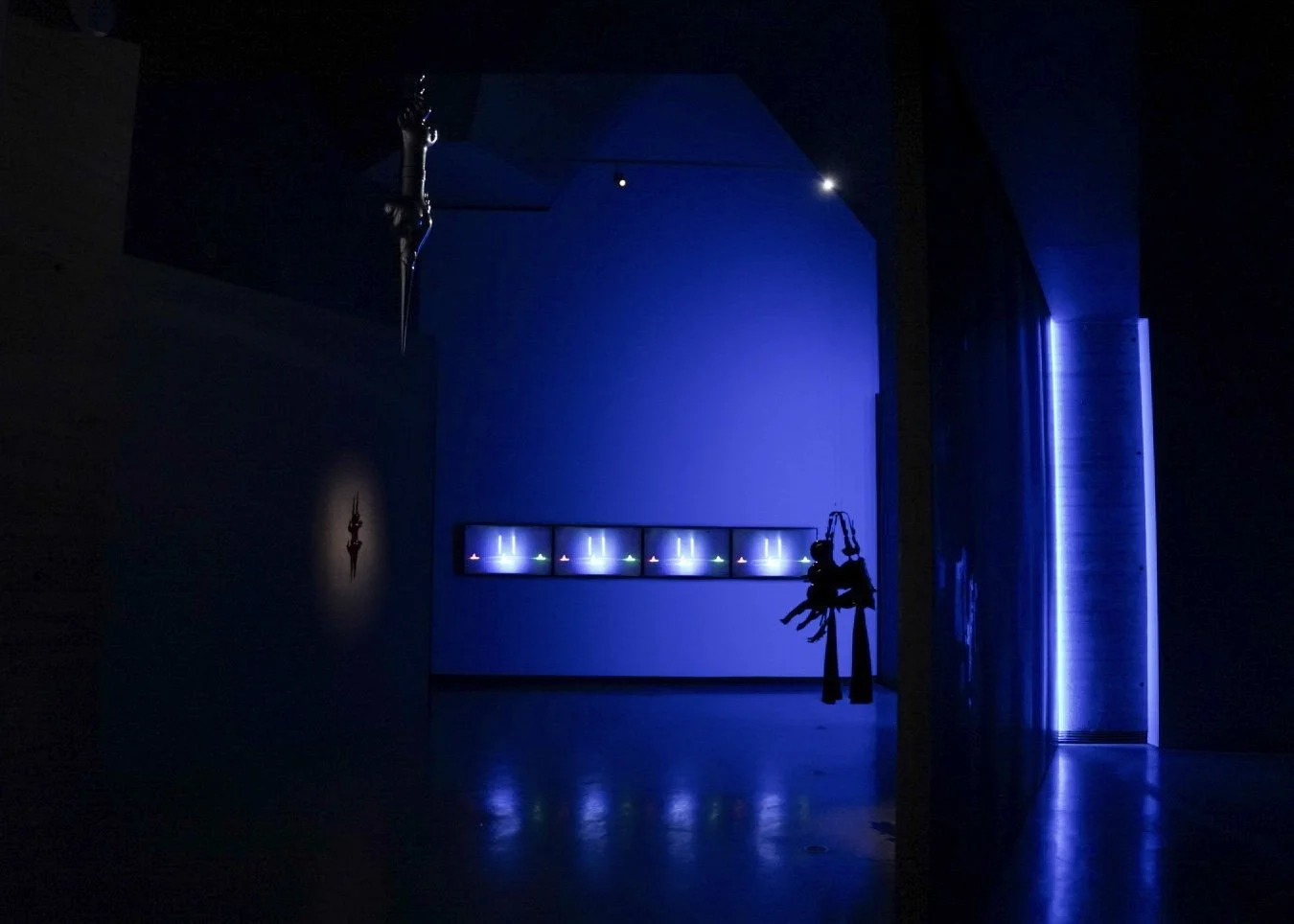
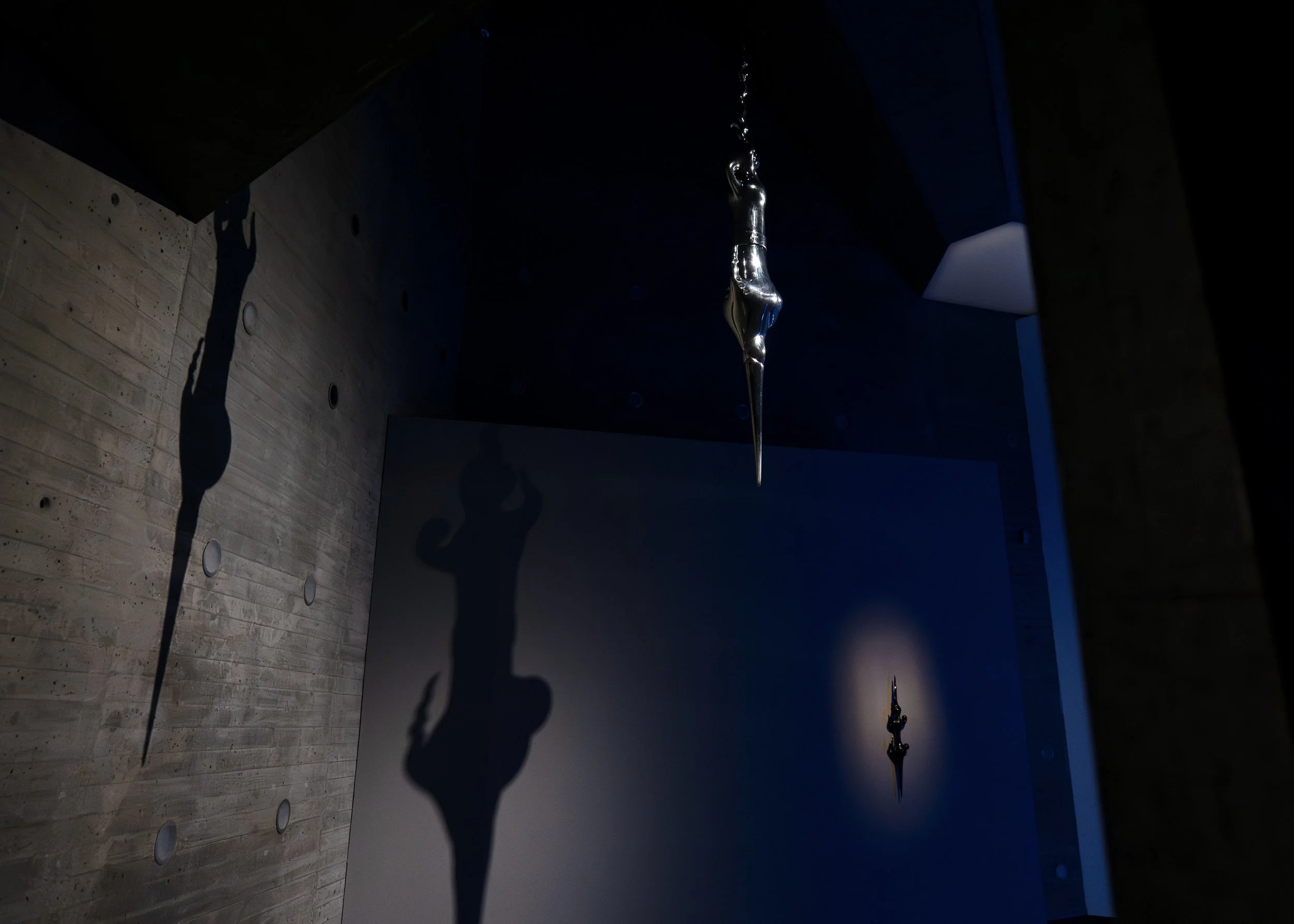
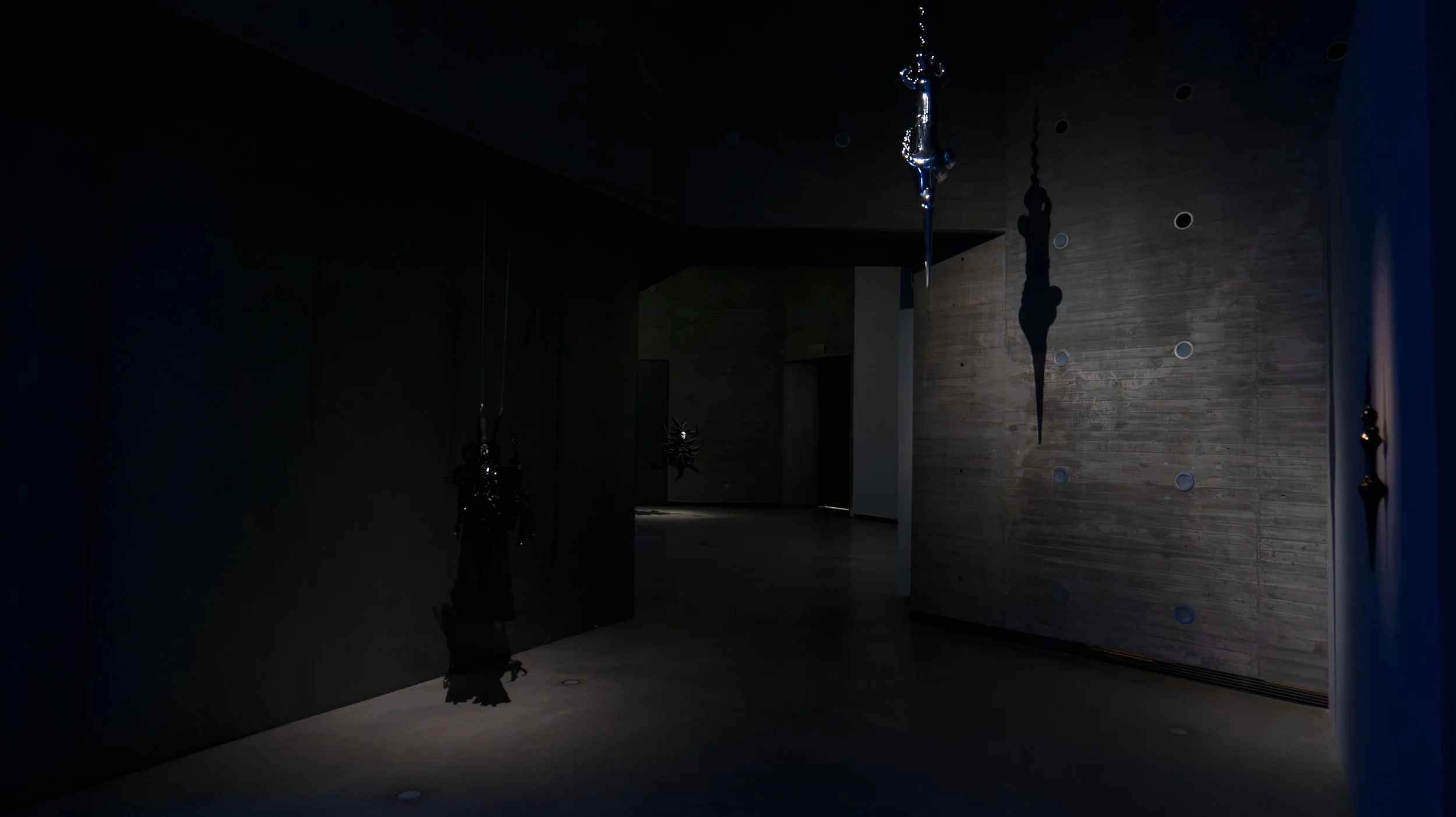
If Void gives this cosmology cinematic life, Serafin’s sculptural works, particularly those
developed through the ongoing project Relics, give it material density. The word relic
carries a specific and deeply charged meaning in the Philippine context. Under Spanish
Catholicism, relics (bones, fragments of skin, blood, and objects associated with saints)
were instruments of colonial power. They were brought across the Pacific from New
Spain (Mexico) to anchor Christian authority in Indigenous lands, embedding the sacred
within flesh and matter. Bodies were broken, divided, and sanctified, teaching colonial
subjects how to venerate certain forms of suffering while erasing others.
This history lingers in the term itself. A relic is a piece of a body that has been
separated, preserved, and made meaningful through belief. It is both holy and wounded,
both sacred and violated. Serafin reclaims this ambivalence. Their Relics are not
devotional objects in the Catholic sense, but neither are they neutral sculptures. They
are fragments of hybrid bodies, speculative remains from worlds shaped by colonial
rupture and queer survival.
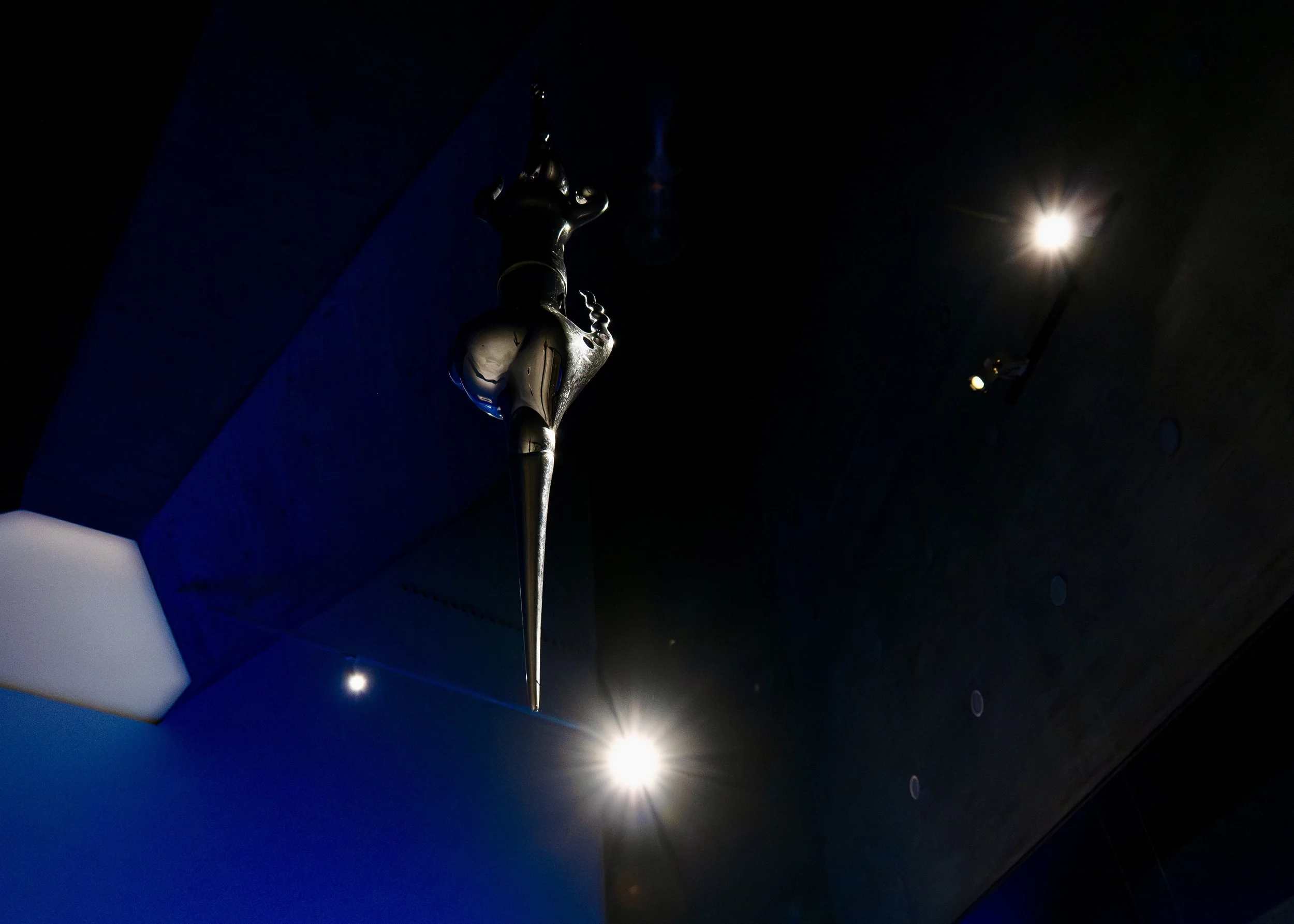
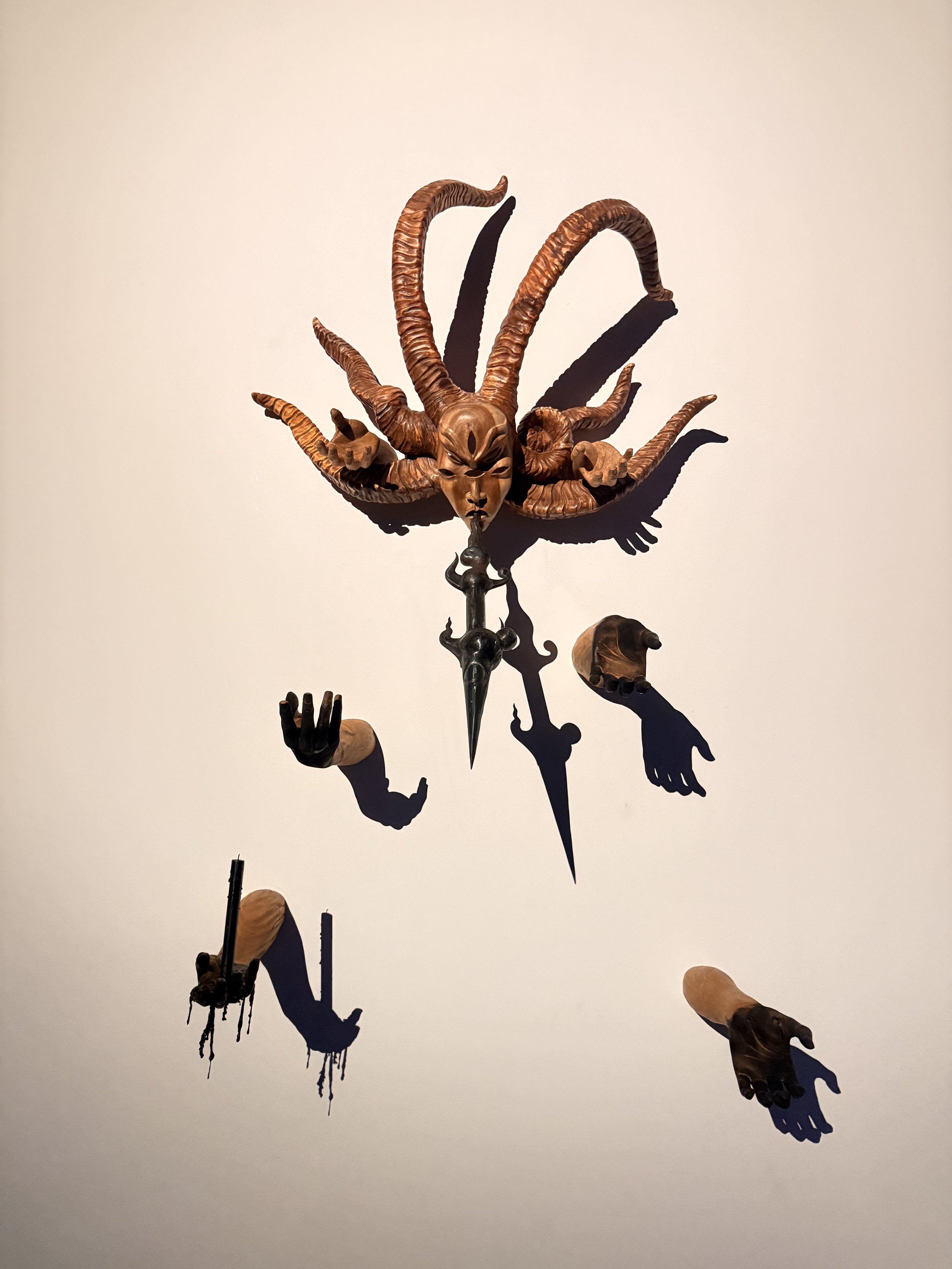
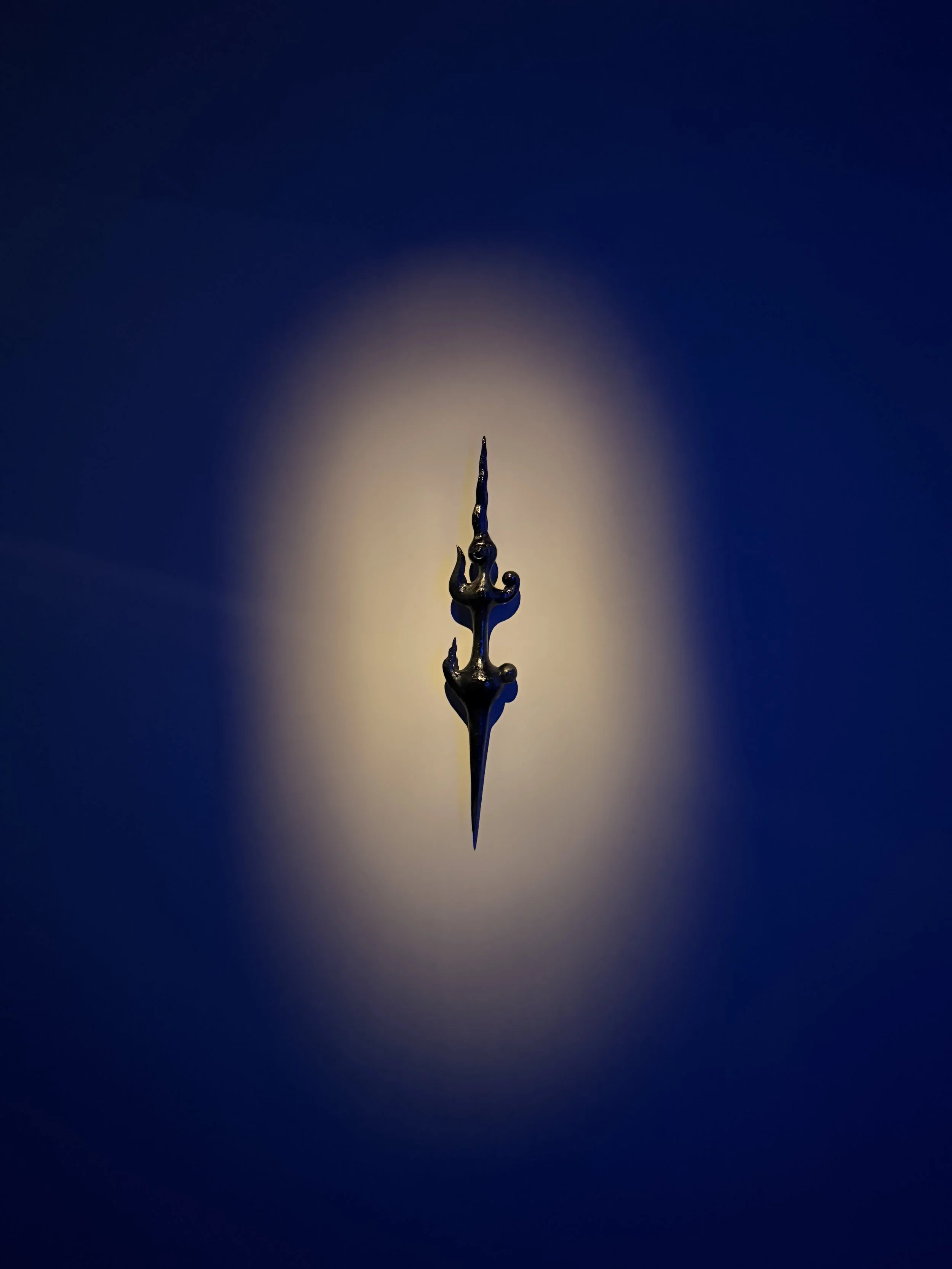
These objects resemble ritual tools, prosthetics, or fragments of, in some cases,
unknown anatomies. Their polished, cracked, and scarred surfaces also evoke skin.
They appear to have been touched, handled, perhaps even venerated. In this sense, the
Relics in this exhibition operate as counter-archives. Where colonial Catholic relics
sought to impose a singular spiritual narrative through fragments of sanctified flesh,
Serafin’s Relics preserve what cannot be canonised: queer and culturally hybrid forms
of life that have been excluded from official memory. They do not testify to a
redemptive past but to ongoing survival within and against erasure.
The surfaces of these works shine and reflect light. They ask to be looked at closely,
almost touched, and venerated. Like the body of Void, they turn the surface of the body
into a site of meaning. Skin here is not a boundary but an archive, a site where history
has left marks, where pain and pleasure cohabit. The exhibition Splitting the Snake’s
Heart becomes a constellation of luminous bodies and fragmented remains of imposed
histories, from where other worlds insist on being imagined.
Curated by Inti Atawallpa Guerrero
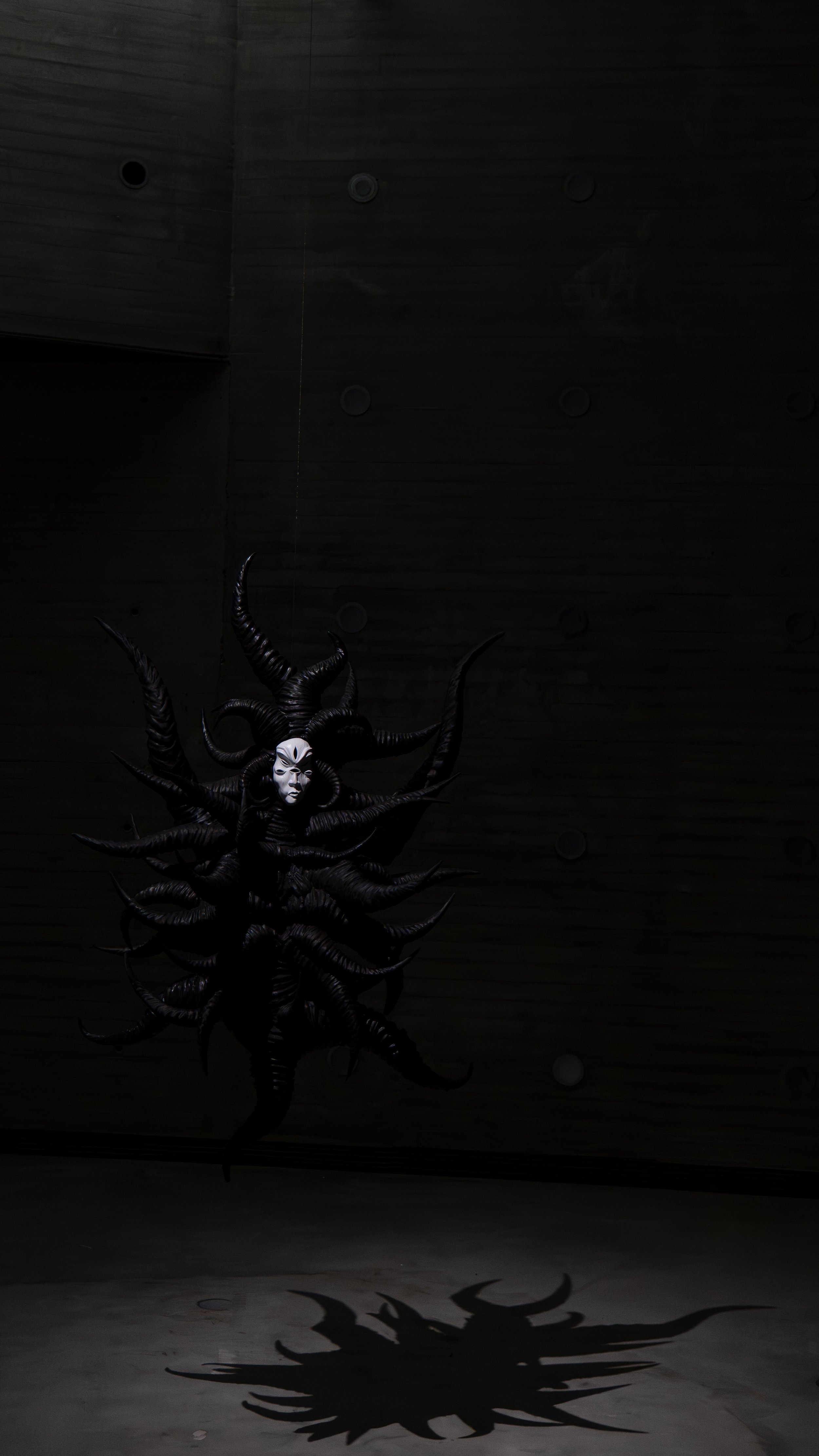
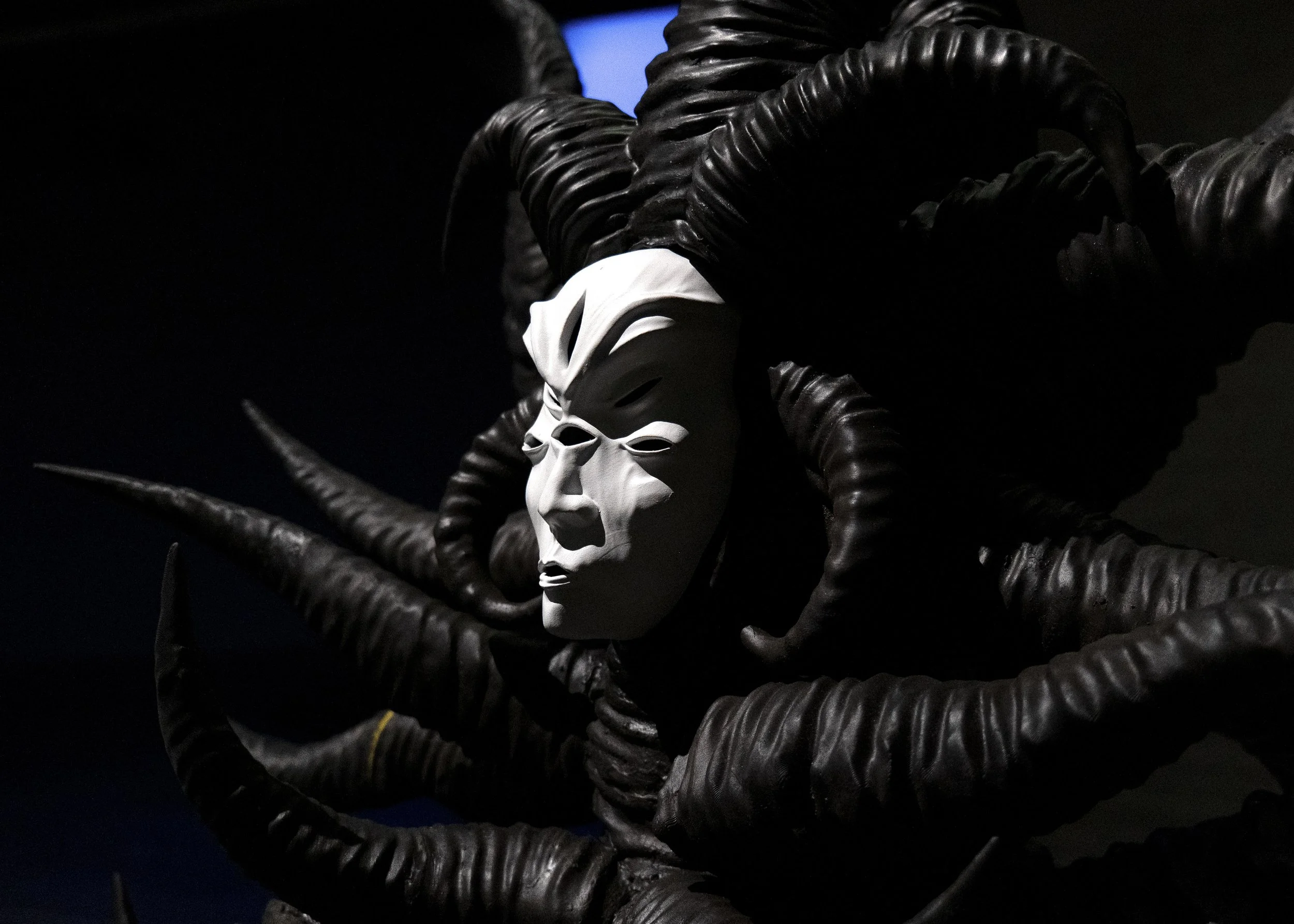
“Apo Kadang” 2026
Printed with matte finish
Dimensions: 155cm lenght x 100cm
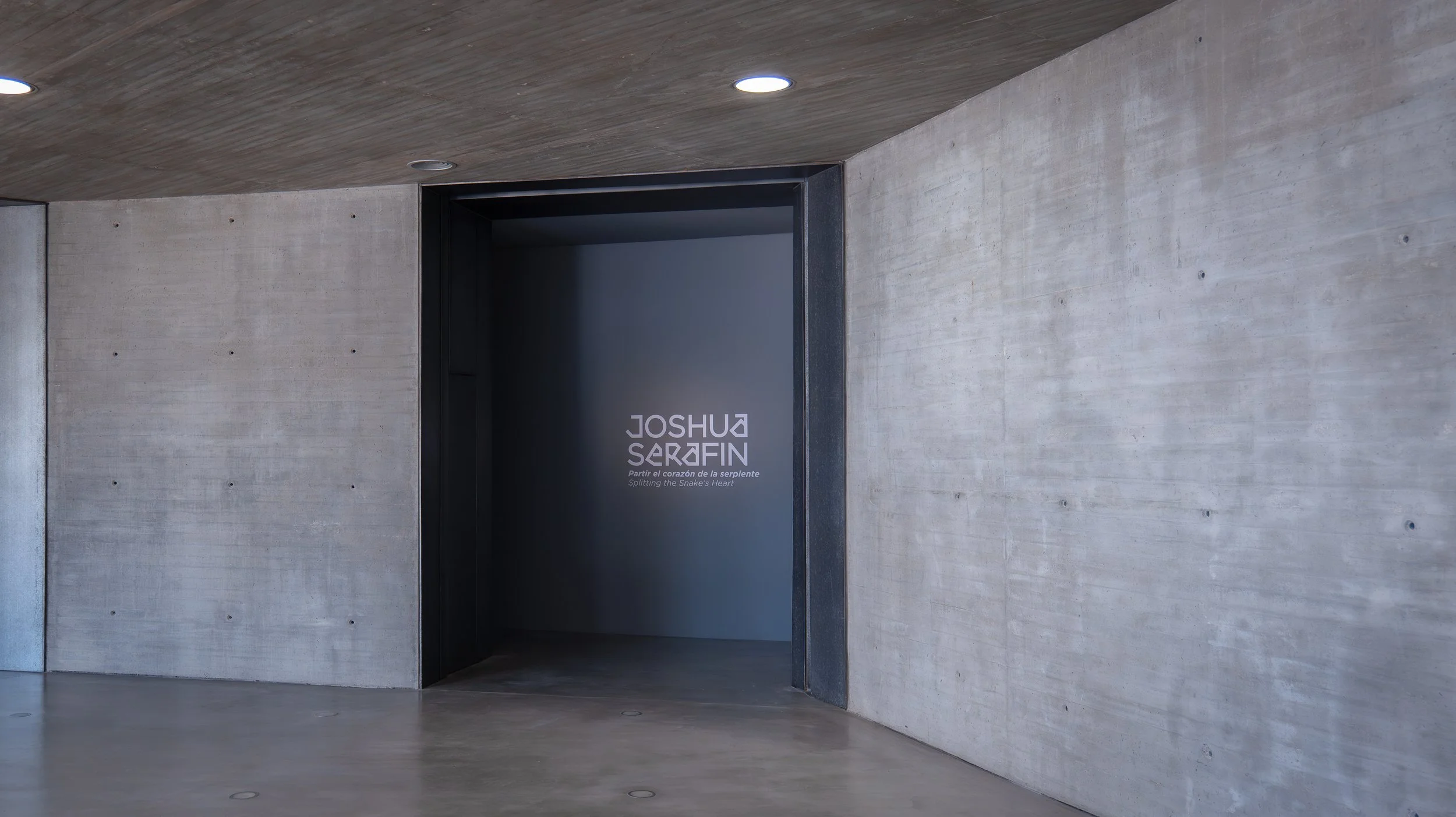
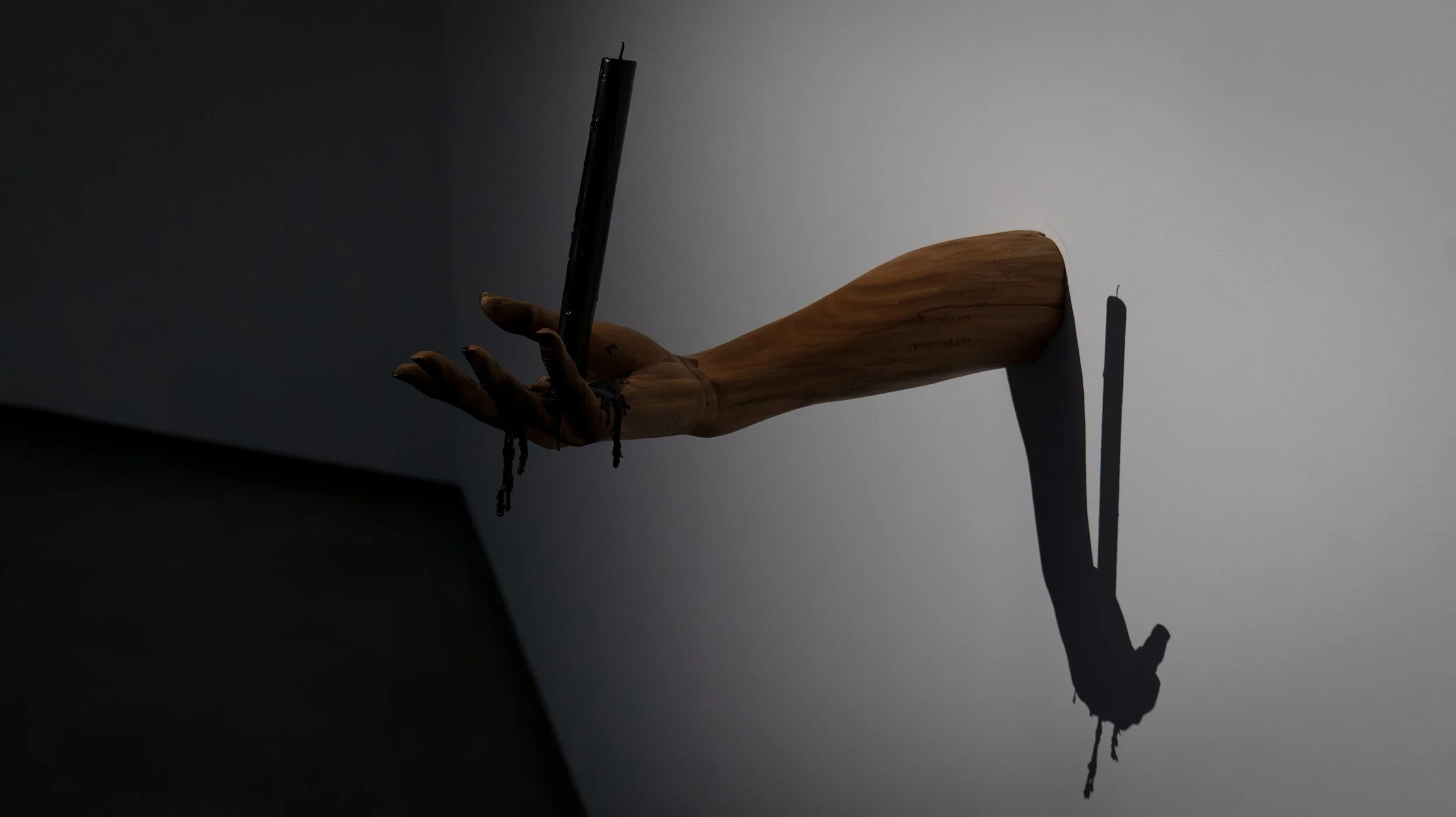
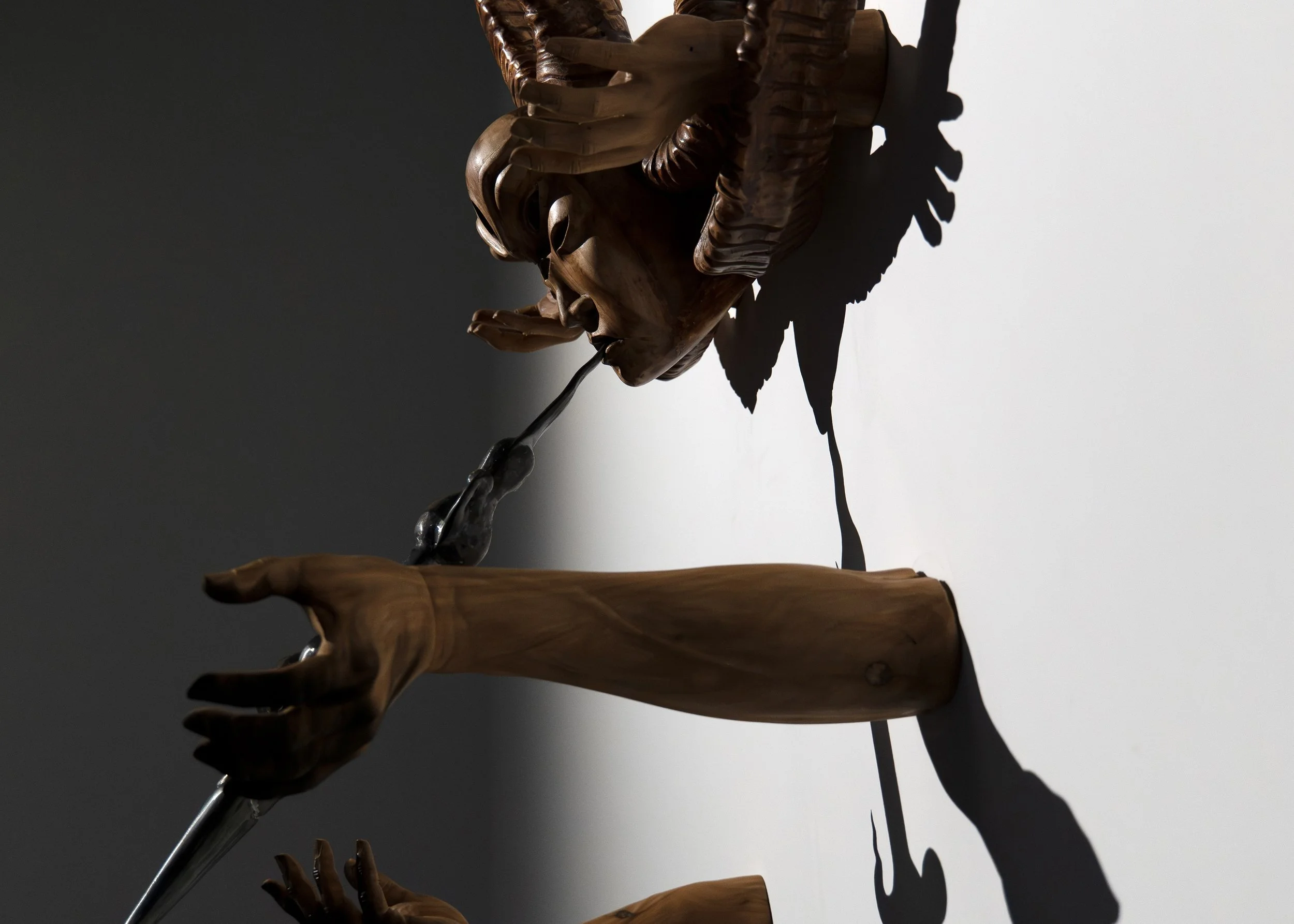
“Masskara” 2026
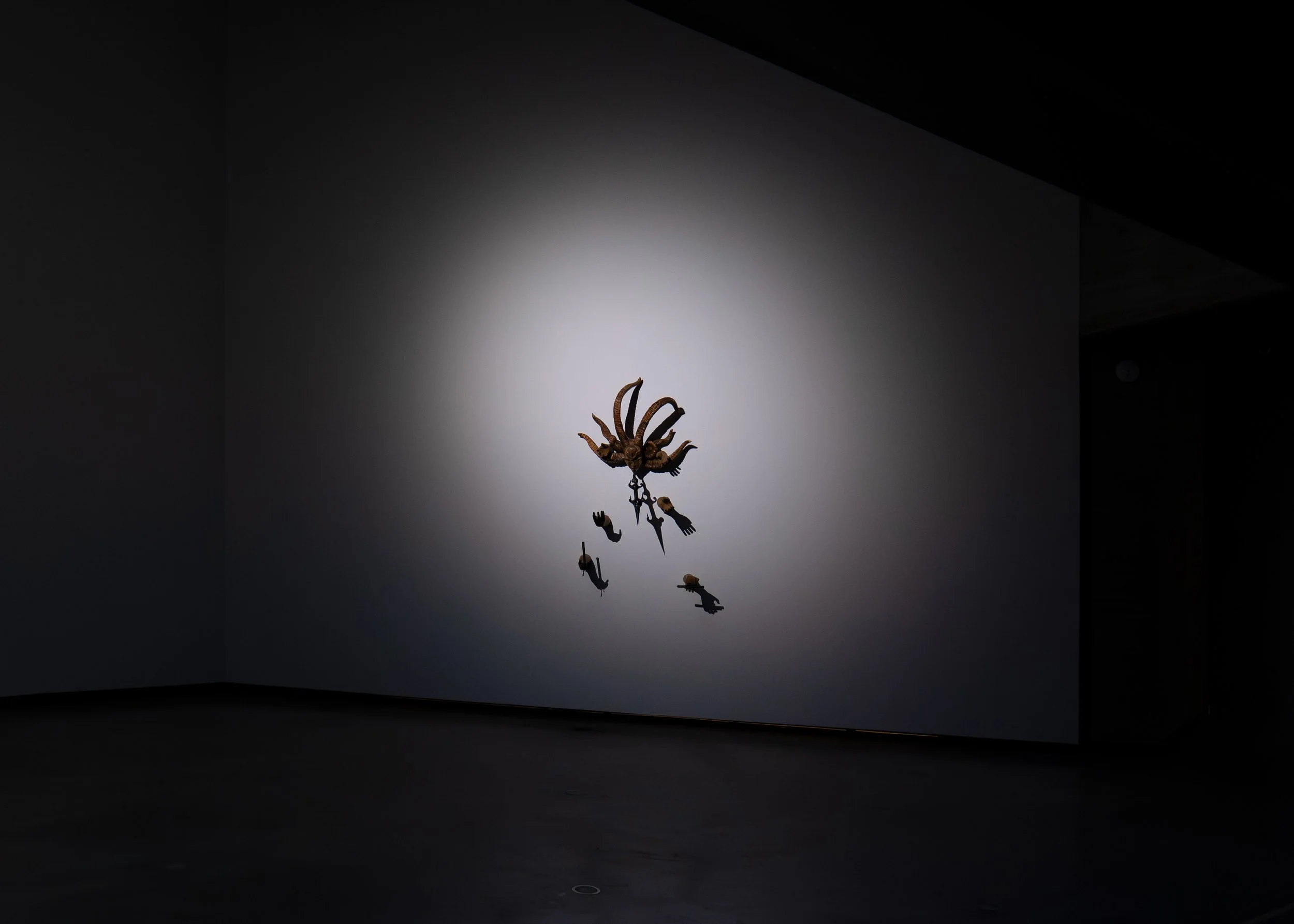
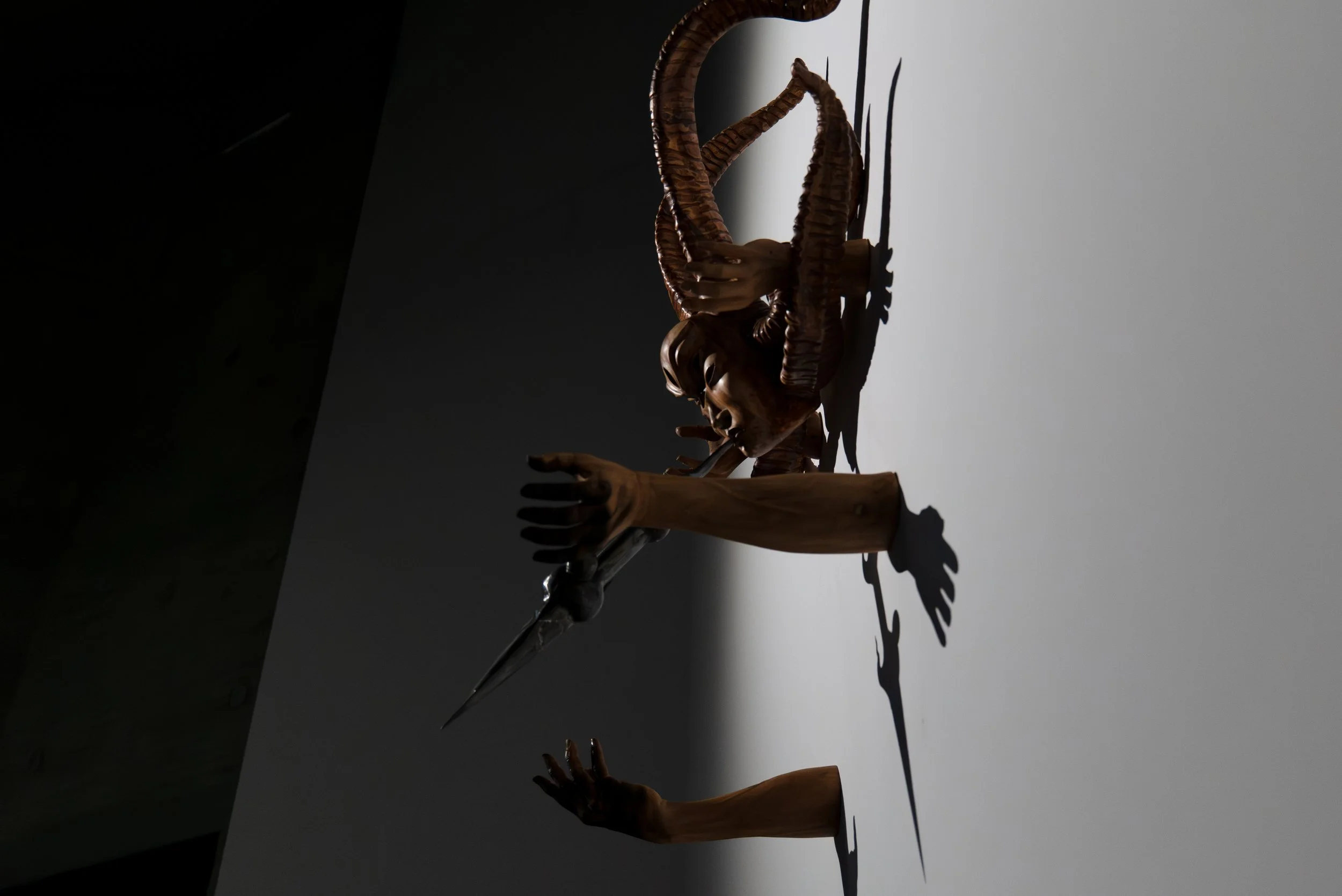
Sculpture, carved wood and metal
headpiece: 66cm x 92cm x 50cm
2 hands 42cm x 10cm
2 hands 42cm x 11cm
2 hands 25cm x 10cm
Metal swords 65 x 11cm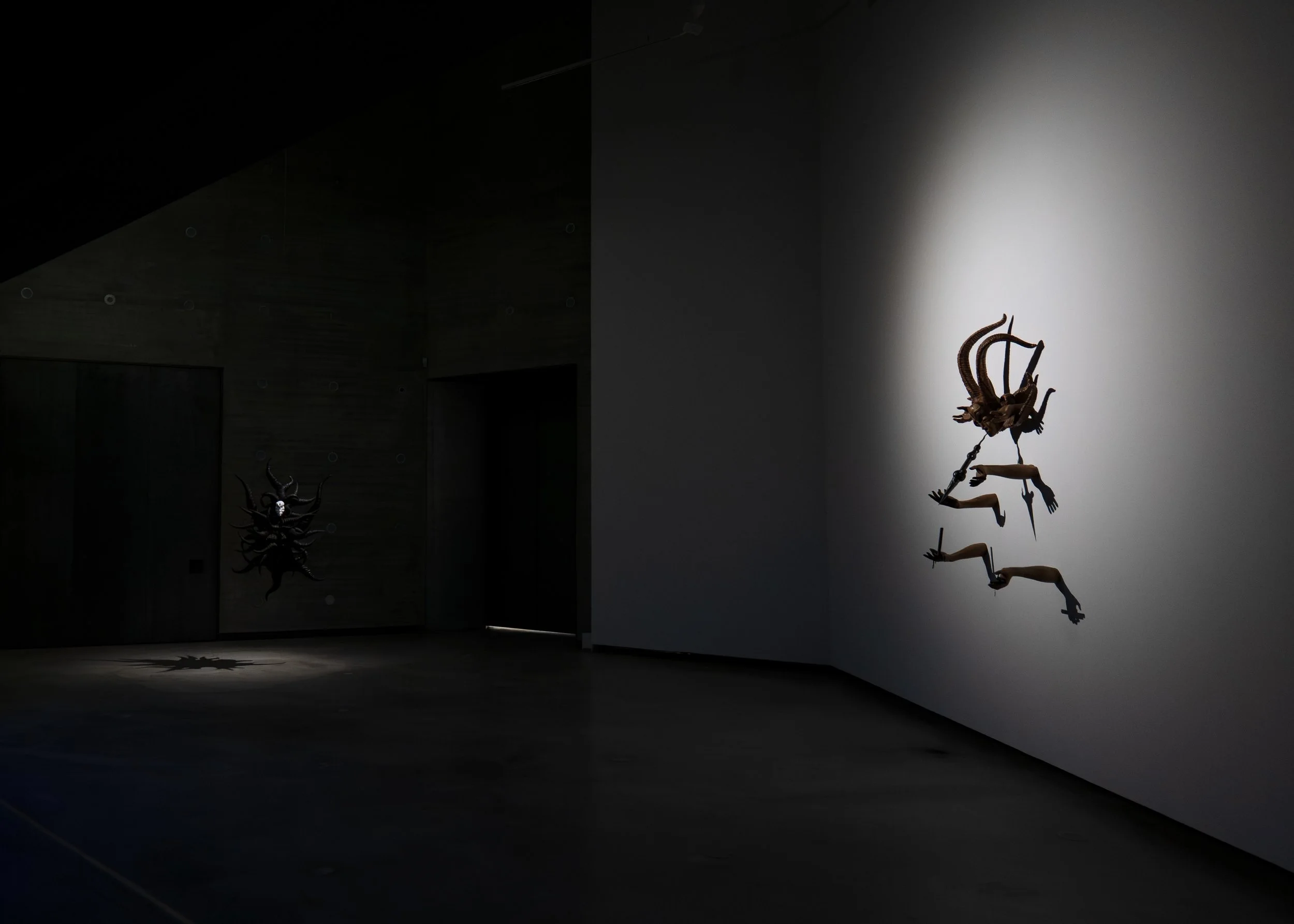
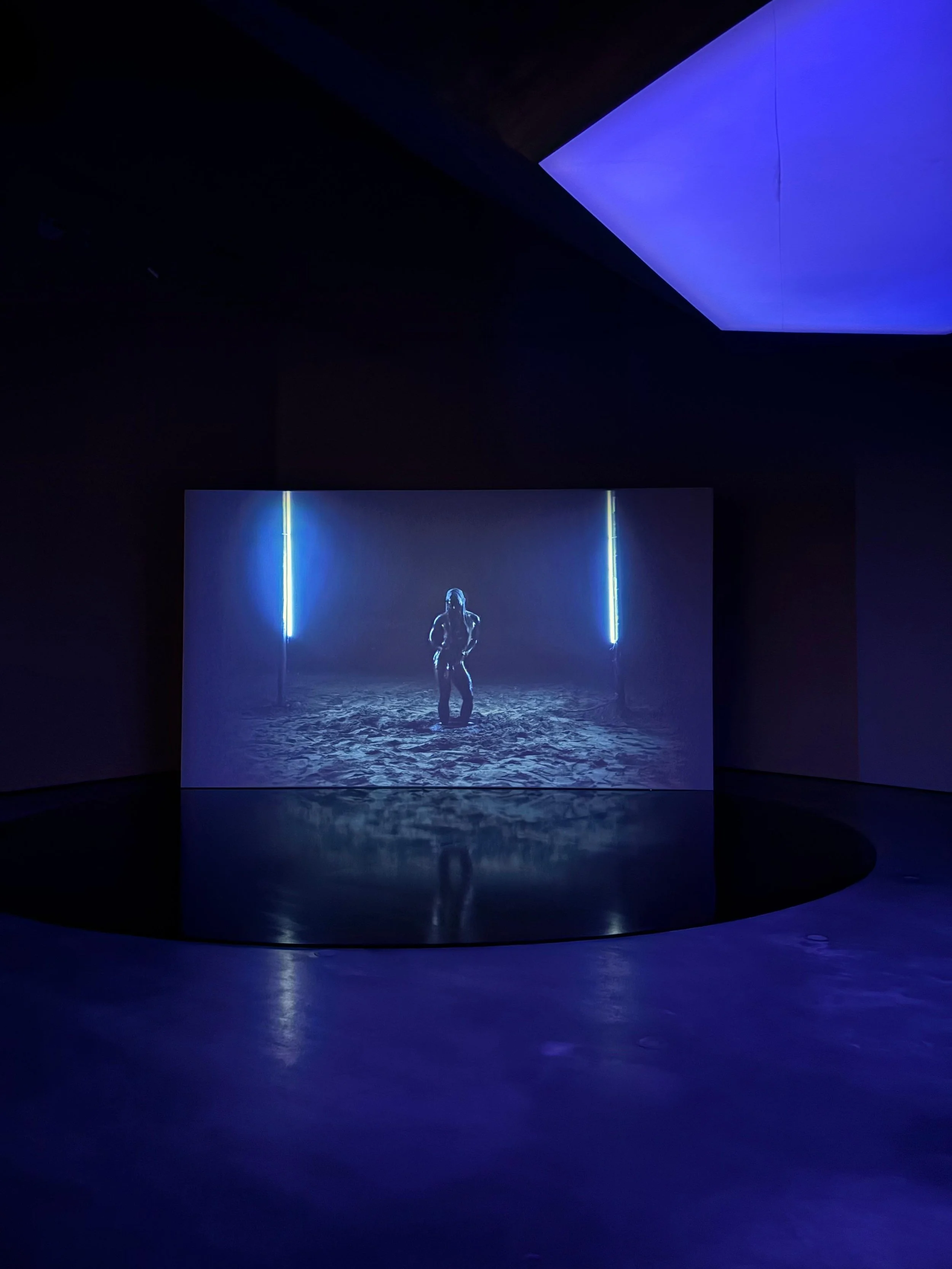
VOID 2023
4k-Single channel video
Duration: 10:32 minutes
Unique Piece
Sundang 2026
Carved Wood
Dimension: 65cm x 11cm
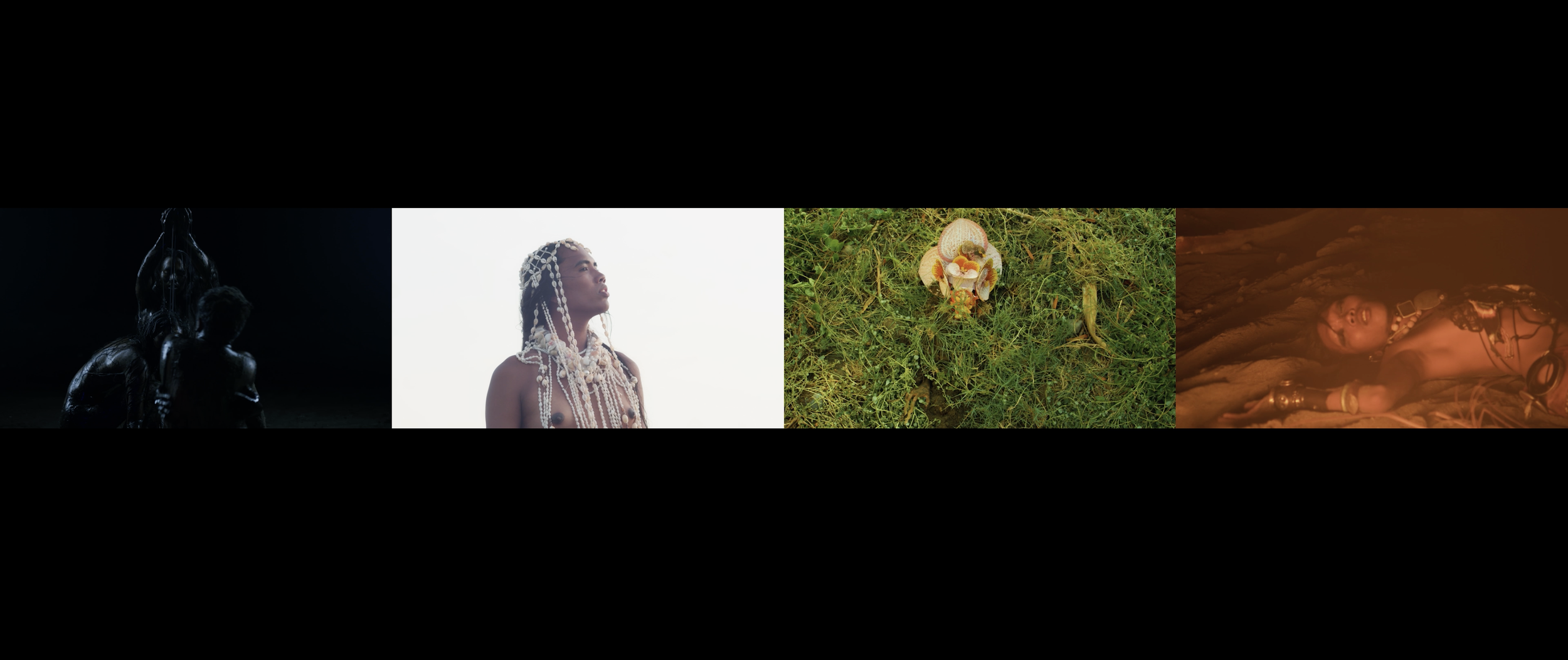
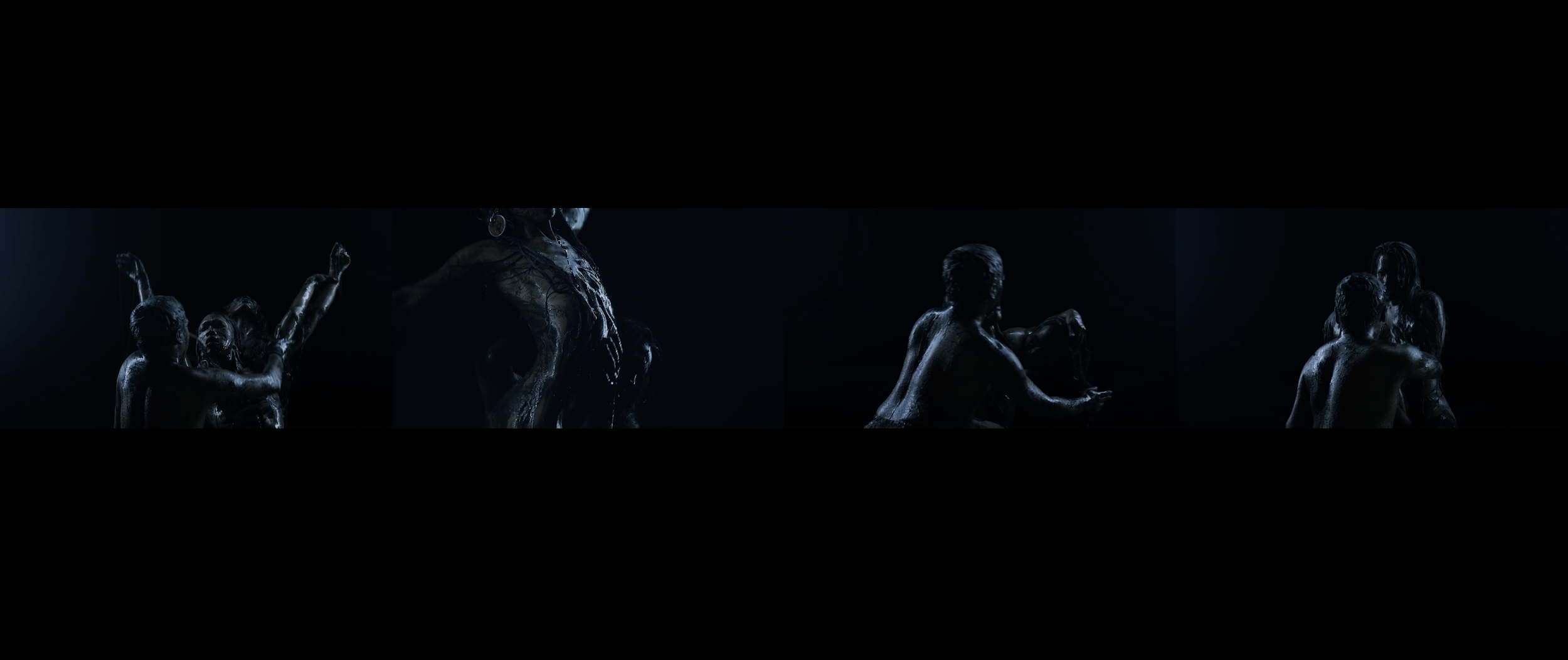
Creation Paradigm 2024
4 Channel Video
Duration 9:41 minutes
Edition of 5 + 2 AP