Grieve the Departed Wound
Introduction
The exhibition opens not with a void, but with a liminal entity: a wound that is already there. This wound is never merely a physical injury to be healed, but a visceral archive where the inner psyche and the outer cosmos collide. It does not simply scar; it drifts, whispers, and lingers within the traces of embodied ideas from past choreographed movements and the shared frequency of a body in affective resistance. Drawing from the mythmaking of divine union and the intimate exhumation of ancestry, the exhibition manifests the wound as a non-binary realm—a threshold where destruction and creation coexist. It is an interval premised on the possible, where art objects depart from the passivity of the past to propose a new material agency for landing a futurity that remain undefined..
Grieve the Departed Wound is a performative milieu that dislodges the exhibition from the white cube and situates it within a black box. Here, the traditional boundary between spectator and performer dissolves into a site of intra-action between objects and humans—a process of co-constituted worlding. Within this atmospheric environment of contemporary abstractions and indigenous cosmovisions, visitors become part of a dynamism of forces composed of light, sound, fluids, biomaterials, and spirits. They complete the wound and inhabit the very entanglement they witness—moving, imagining, and breathing through the work.
The journey begins with Lost Ancestors, Serafin’s ongoing research into their forgotten family history. Rooted in the story of their great-great-grandfather, Shentaro Esaki—a Japanese migrant worker who moved to the Philippines in 1909—the work unearths a genealogical heritage tangled with a colonial past. In the lightbox photographs Void and Relics, the body becomes a threshold. The former captures Serafin covered in black liquid and pearls under a celestial gaze; their translucent, cataract-white pupils radiate a "blindsight" that connects the mortal vessel to the ancestral spirit. The latter resembles a post-mortem ritual: Serafin’s mutated, bluish skin is enchanted by light strips emanating from the mouth, returning a voice to ancestors long silenced by history.
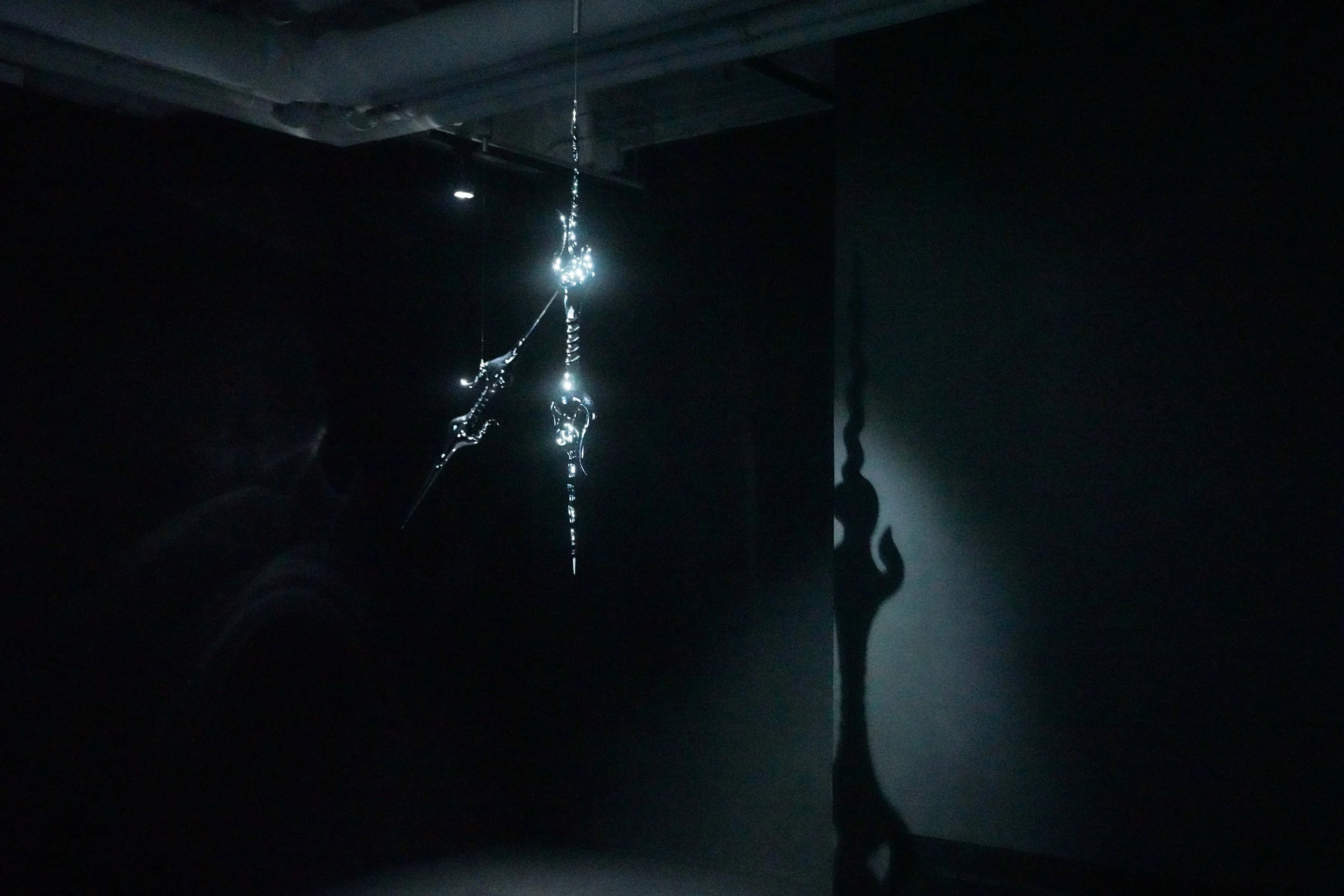
This reclamation continues in Serpents, a pair of electro-plated 3D-printed swords worn in the performance Relics. Reimagining pre-colonial Filipino weapons archived in Western institutions, the work questions erased lineages and displaced indigenous knowledge. Reconfigured here as a kinetic installation, the swords move in a state of perpetual flux—ascension and descension, obliteration and resurrection. This mechanic reactivates the double swords, transforming a weapon of war into a ritual tool for healing. It confronts the resonance of amnesia and remembrance, asking how a body becomes a relic cracking the endurance of migration and colonization, rejuvenates again.
The exhibition transitions into Cosmological Gangbang, a previous cosmological project that decolonizes the cis-heteronormative iconographies implemented by the West in the Philippines. By referencing pre-colonial gender and belief systems, Serafin rewrites and speculates a Filipino identity that is fluid and divine. Creation Paradigm is a four-channel video projection featuring queer performers Bunny Cadag, Lukresia Quismundo, and John Chesleigh Nofiel as contemporary babaylans (shamans). Together, they world a new cosmology through incarnating the goddesses Uling (light and dark), Talu (the reflection of oneself), and Waling-Waling (the euphoria of love). Their divine union is mediated by the "Void," a primordial black swamp that procreates a new deity from the collective.
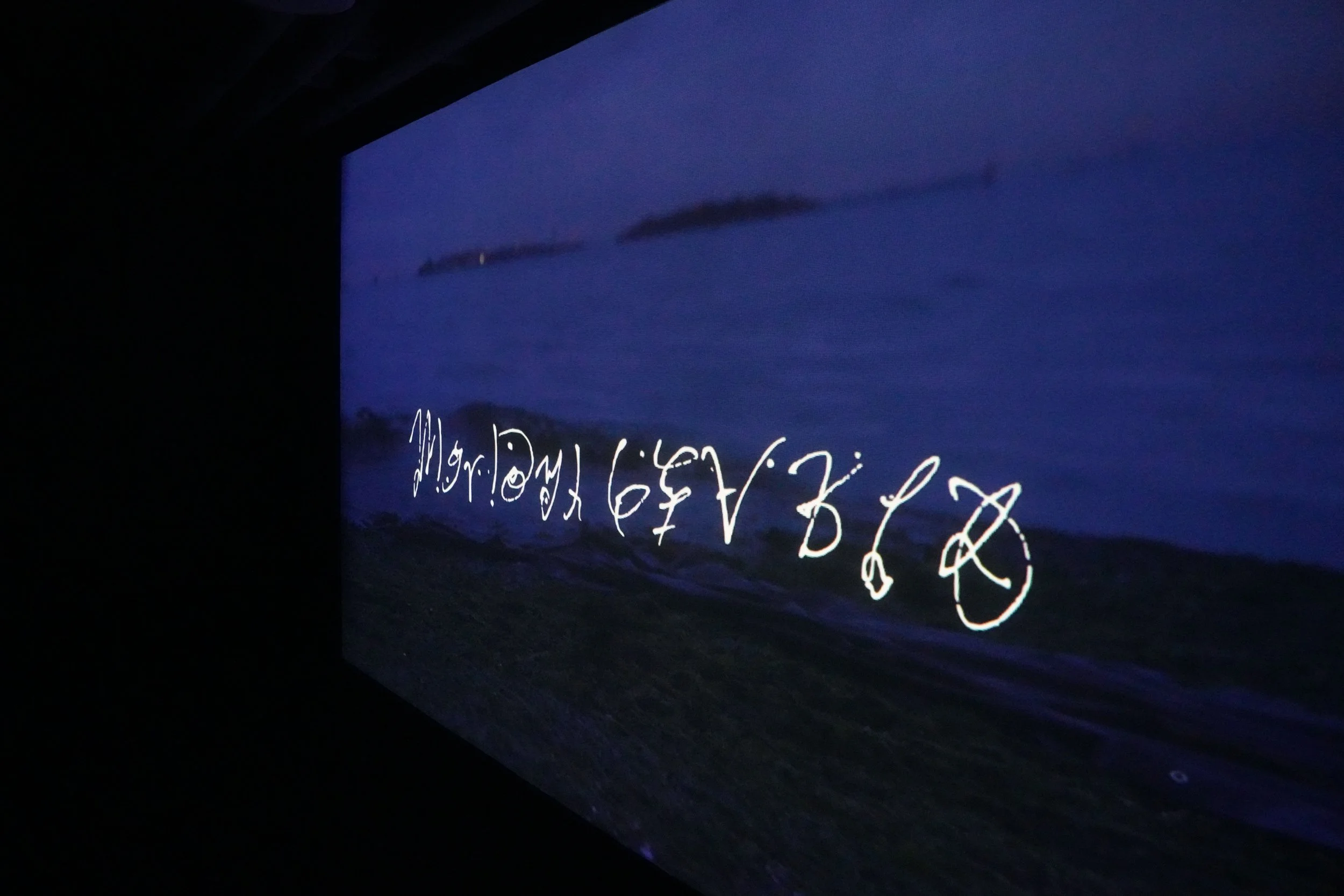
Pearls is a text-based installation originating from performance scripts of the same title. By referencing the sobriquets of Philippine, "Perla de Oriente" (Pearl of the Orient) by Spanish missionary Juan José Delgado and “Perla del Mar de Oriente,” (Pearl of the Orient Sea) by Filipino national hero José Rizal," the work explores how the pearl was paradoxically imagined as both colony and motherland. Excerpted dialogues and scene descriptions infiltrate the gallery walls like the inscriptions on tombstones. These narrative fragments do not impose direction; they allow visitors to dip in and out of a condition of poetic resistance and visceral resonance. Similarly, Midnight Pearls, a single-channel video projection, features the three Filipina trans divines (Serafin, Cadag, Quismundo) reconnecting with the mother pearl. This ritual unveils and exorcises the trauma of historical erasure, envisioning an ethereal transformation where trans bodies and Philippine archipelago are reclaimed as sacred, shapeshifting tears into gems of collective earthly survival.
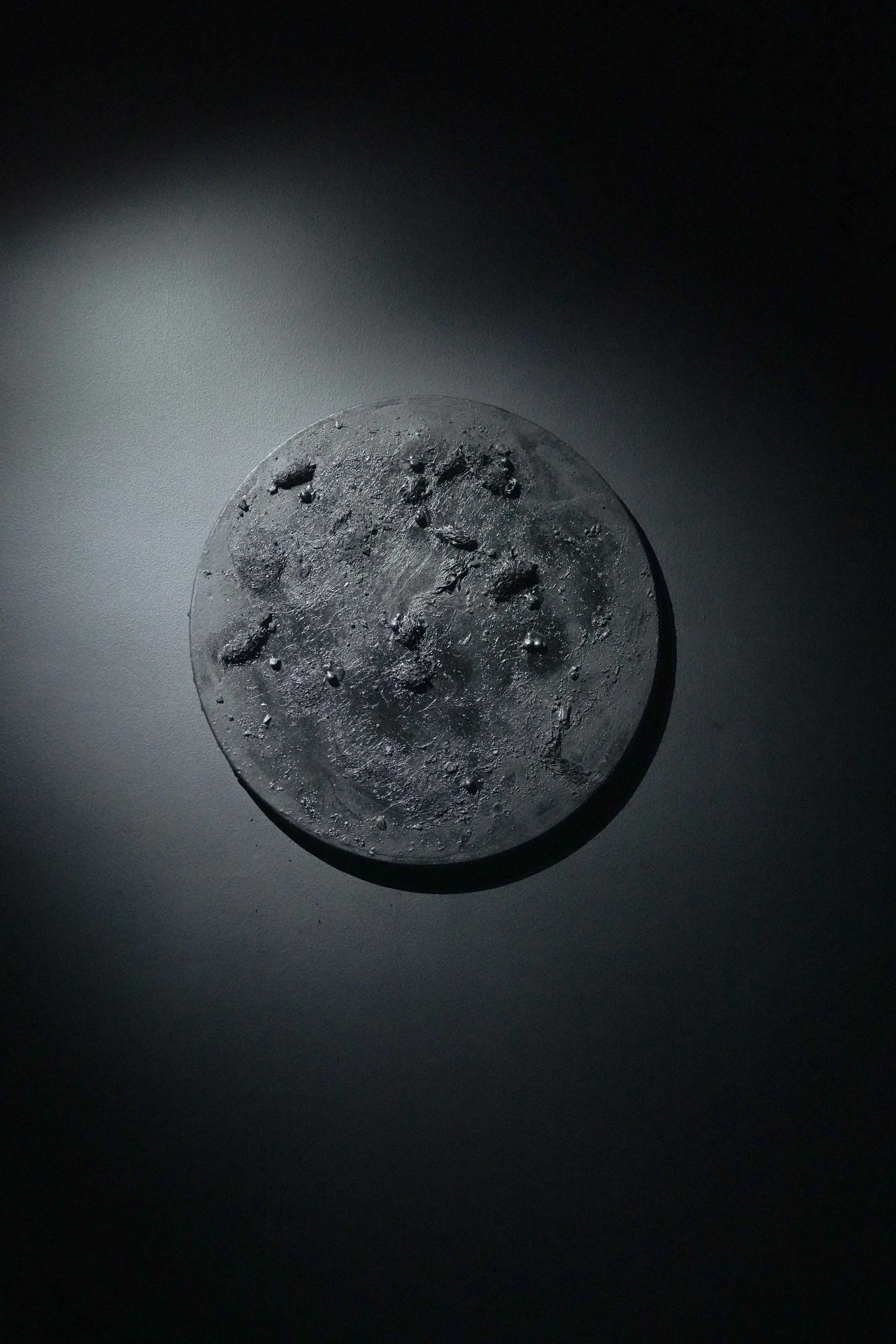
The scenographic manifestation of the Void is reconstructed as a floor installation of black ooze and soil. This black swamp is a vessel of spectral, stagnant fluids that absorb and unleash generational pain. It acts as a portal connecting a pre-colonial past to a speculative future beyond the written temporality of colonization. By proposing the arrival of a new god within a doomed present, the installation refounds a new kind of humanity—one born from the primordial muck of the marginalized. It is an invitation to witness the coming-to-life of a self-regulating organism that governs the cycle of the cosmos: giving, balancing, and ending life. This culminates in a series of canvas works—action paintings that encapsulate choreographed movement. These canvases encompass the artist's physical remnants: hair, sweat, soil, pearls, silicone, and paints that archive apocalyptic moments of homesickness, violence, heartbreak, and melancholy. Decomposed in the body and recomposed in action, these elements reside on the canvas as a texture of the affective and a scent of the atmospheric.
Through this constellation of artifacts and relics, the gallery is reconfigured into a site for grieving vulnerable gestures and improvising rituals of resilience. Surpassing visible spectacle, the milieu turns ambiance into an agent for intra-action. Here, cosmology, ecology, and ideology are conjuncted vibrations, inviting us to inhabit the wounds necessary to float toward a promised hope.
Joseph Chen
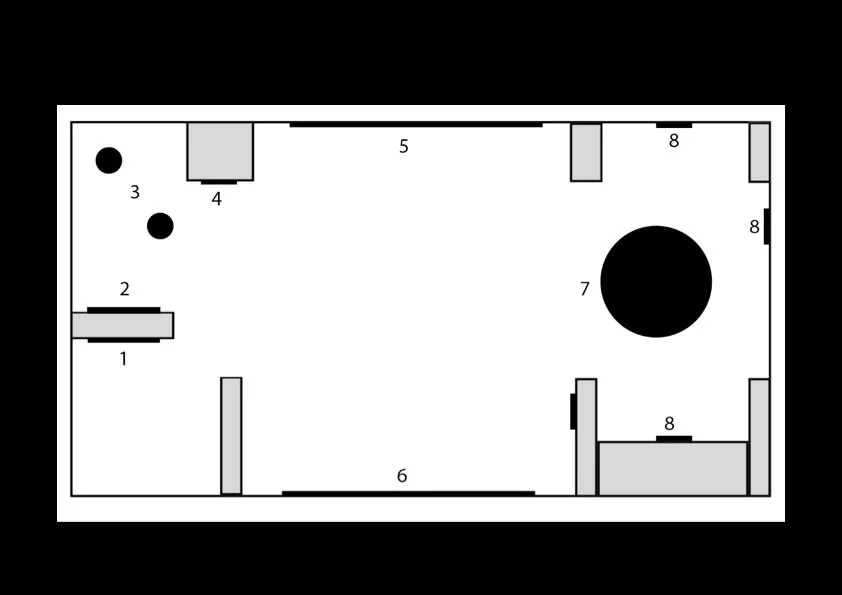
1
Lost Ancestors 2024
Vinyl print in LED lightbox
59.4 x 84.1 cm
2
Relics 2025
Vinyl print in LED lightbox
59.4 x 84.1 cm
4
Pearls 2024
Vinyl Stickers
59.4 x 84.1 cm
3
Serpents 2024
Electroplated 3D prints, mechanical telescopic poles
Dimension variable
5
Creation Paradigm. 2024
four-channel video projection
9’41”
6
Midnight Pearls 2025
Single-channel video projection
9’18”
7
Void 2026
Soil, colored fluid, plastic bucket
Dimension variable
8
Void 2023
hair, sweat, soil, pearls, silicone, paints on canvases
Dimension variable
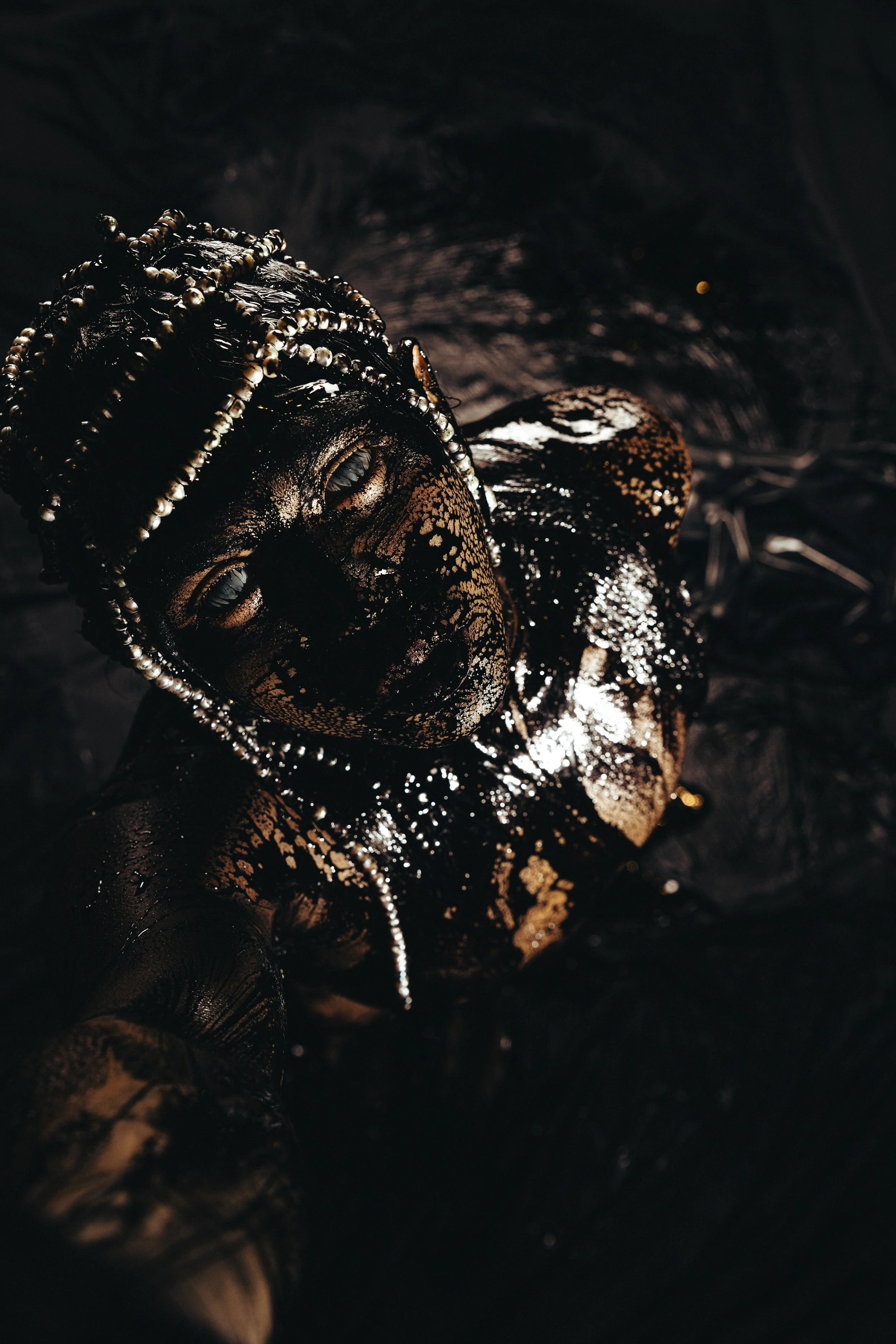
1 Lost Ancestors 2024
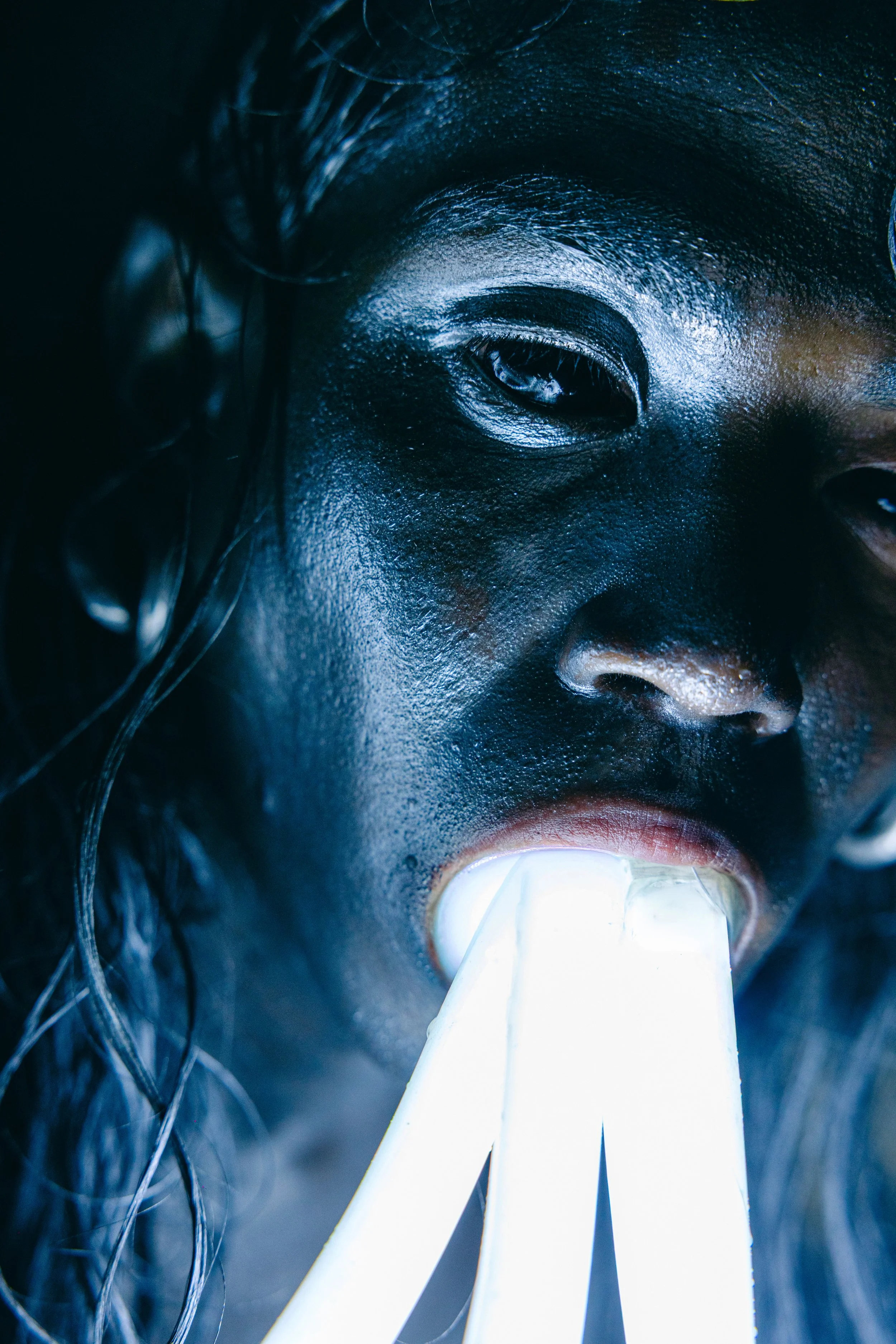
2 Relics 2025
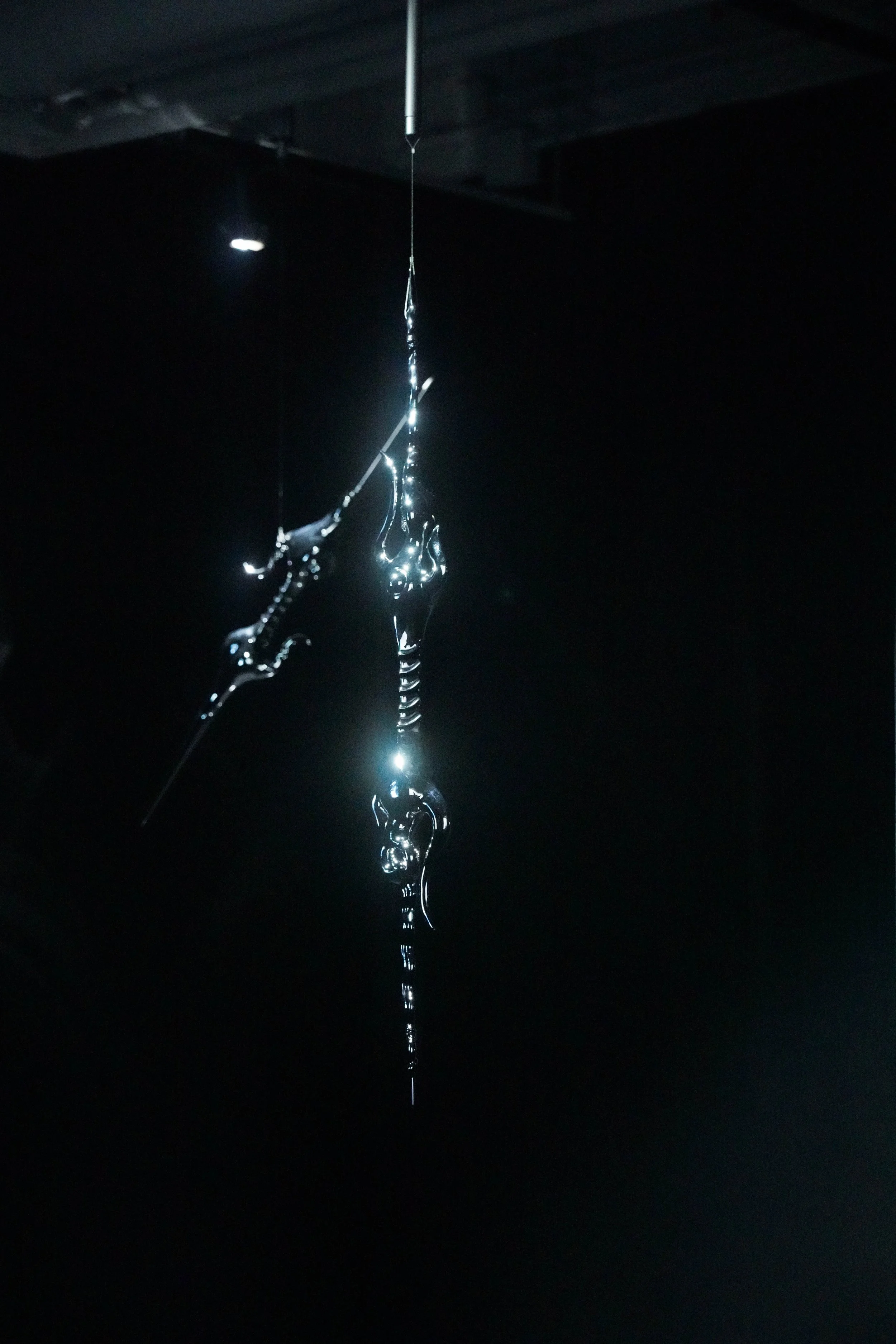
3 Serpents 2024
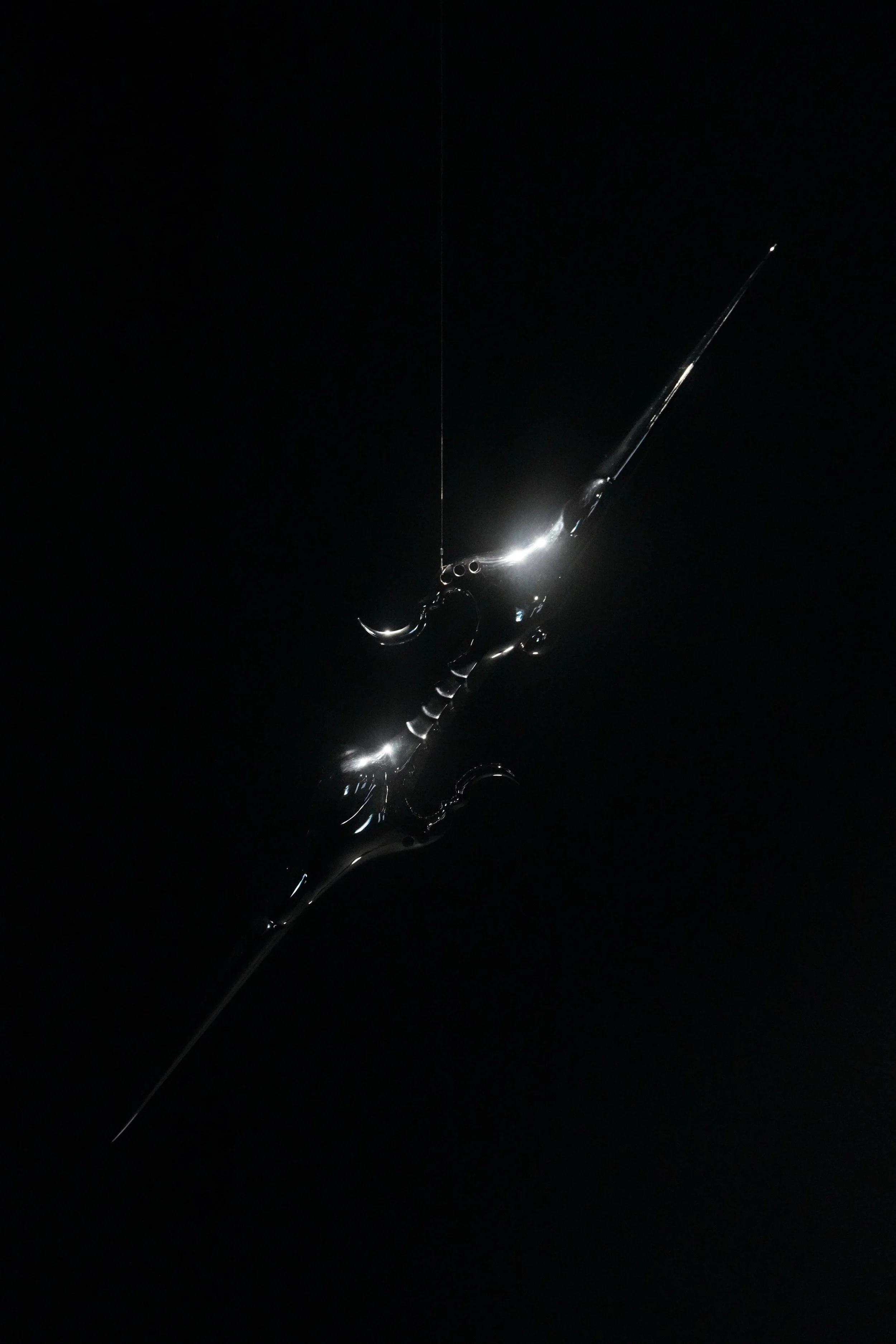

5 Creation Paradigm. 2024

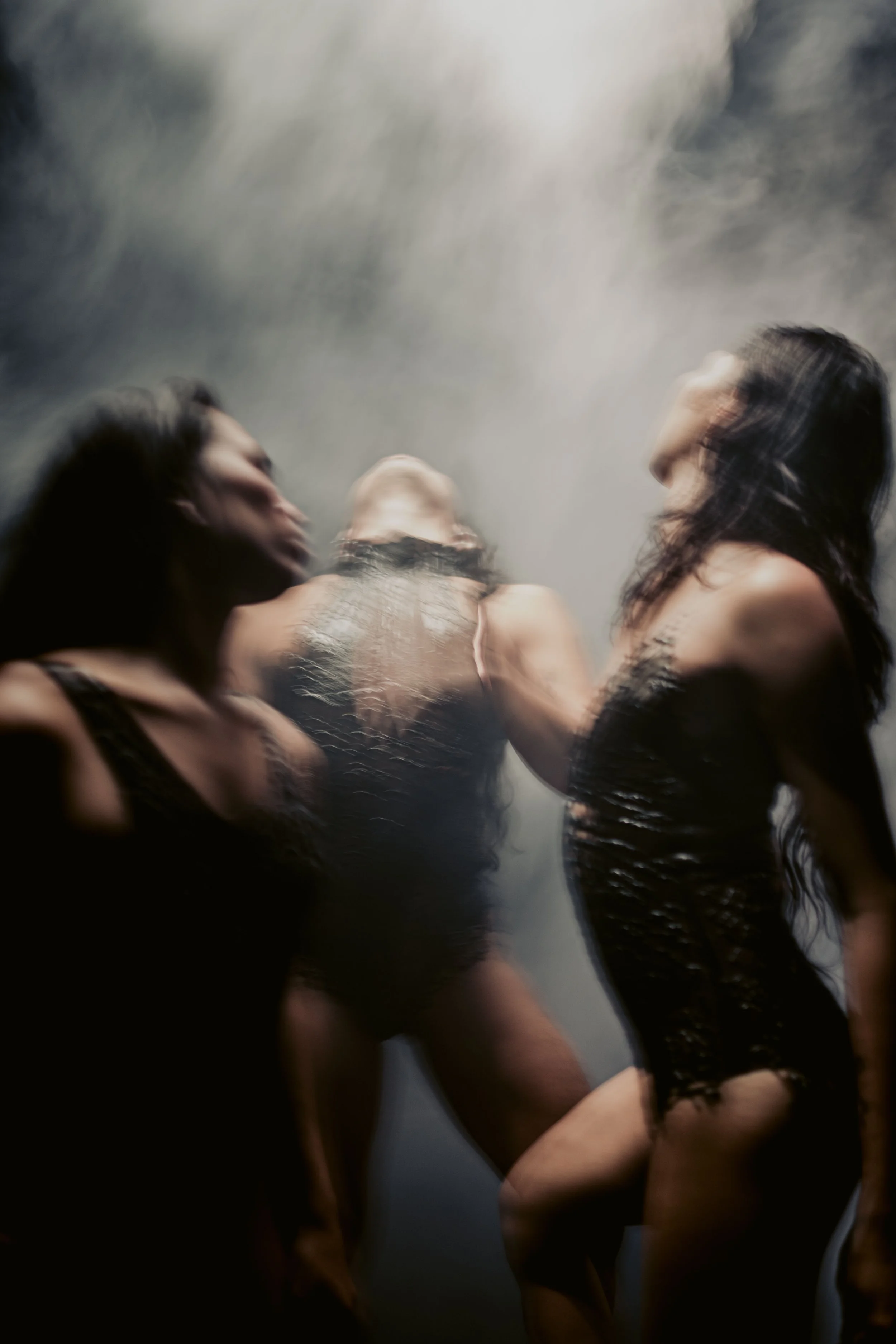
6 Midnight Pearls 2025
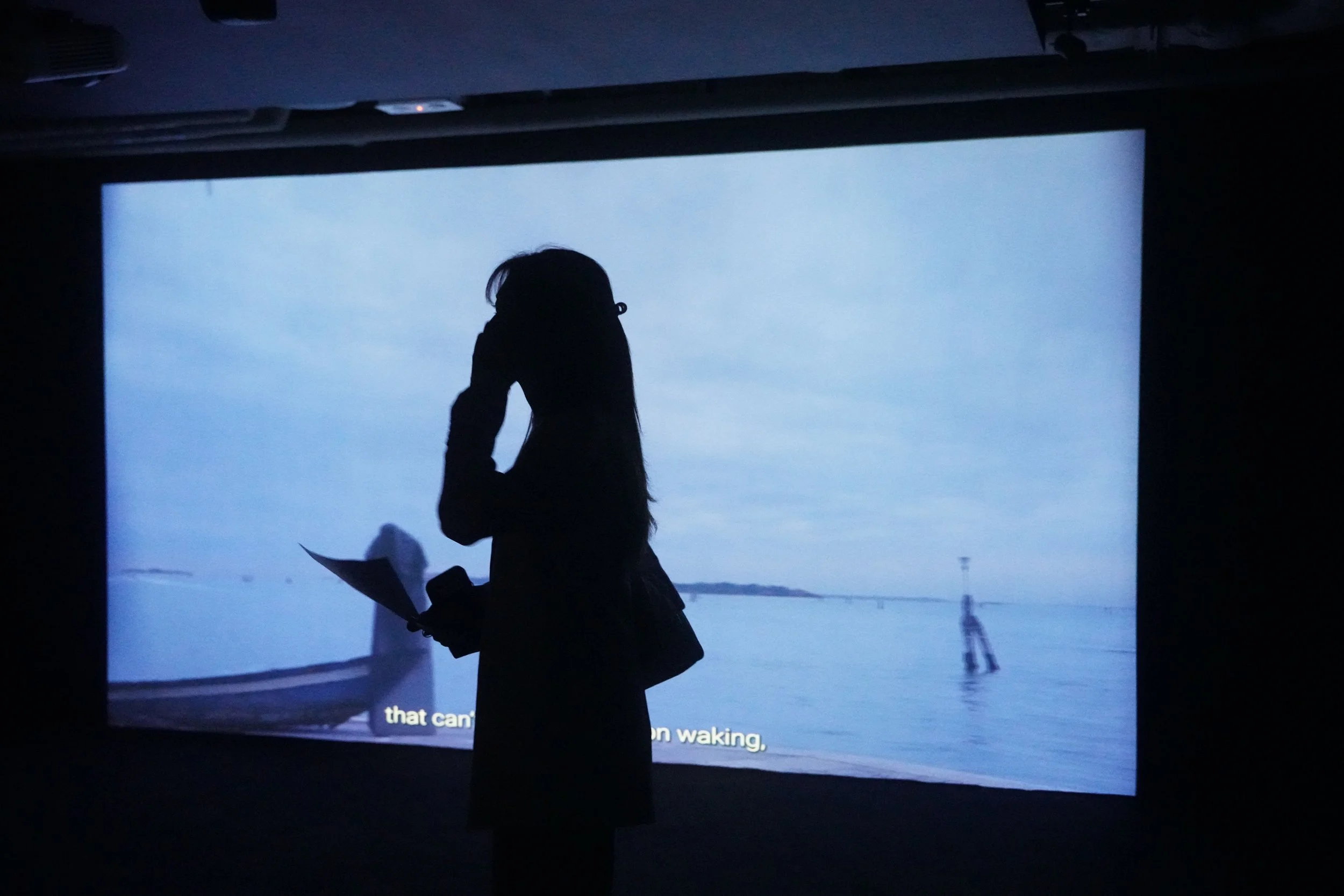
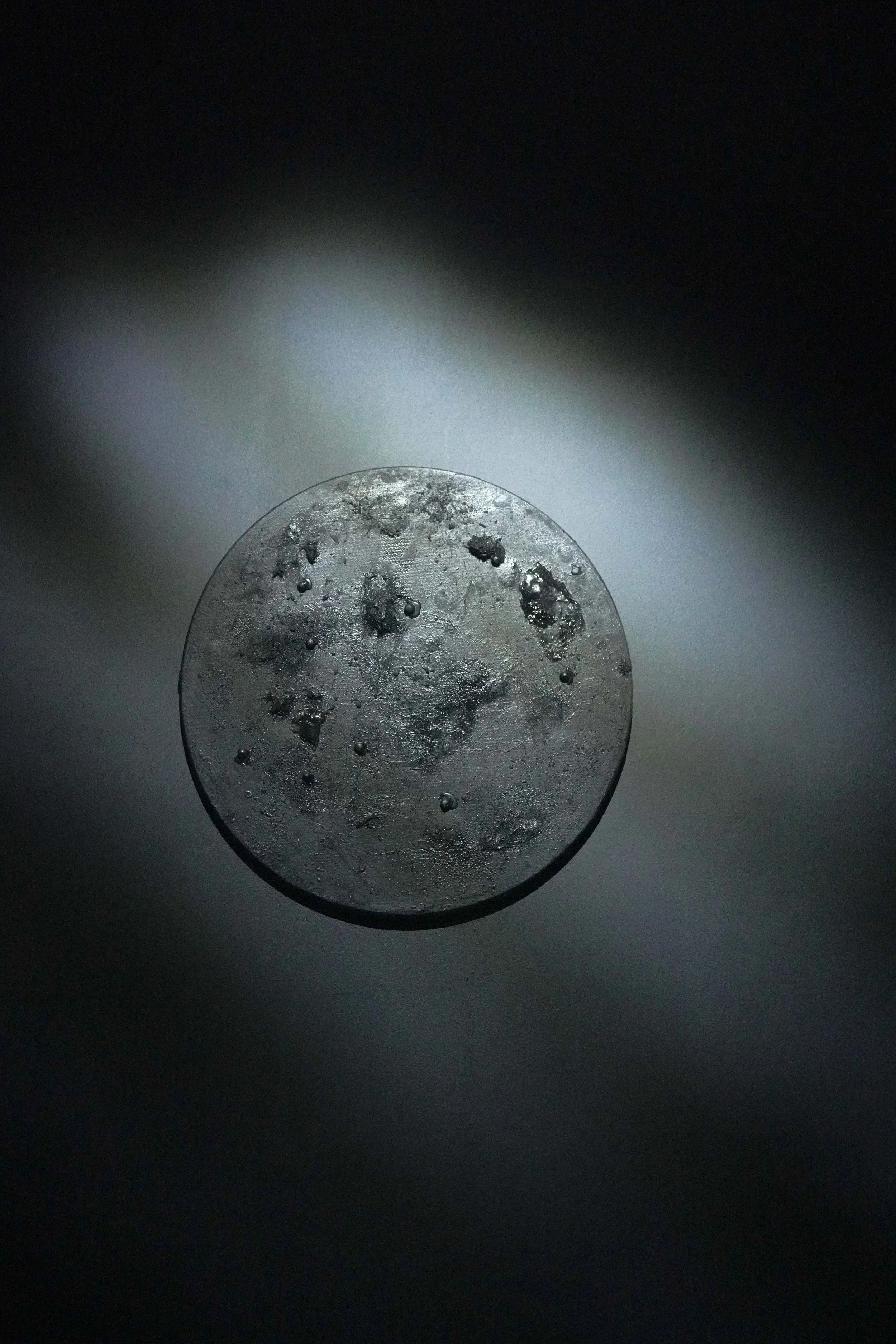
8 Void Paintings 2023
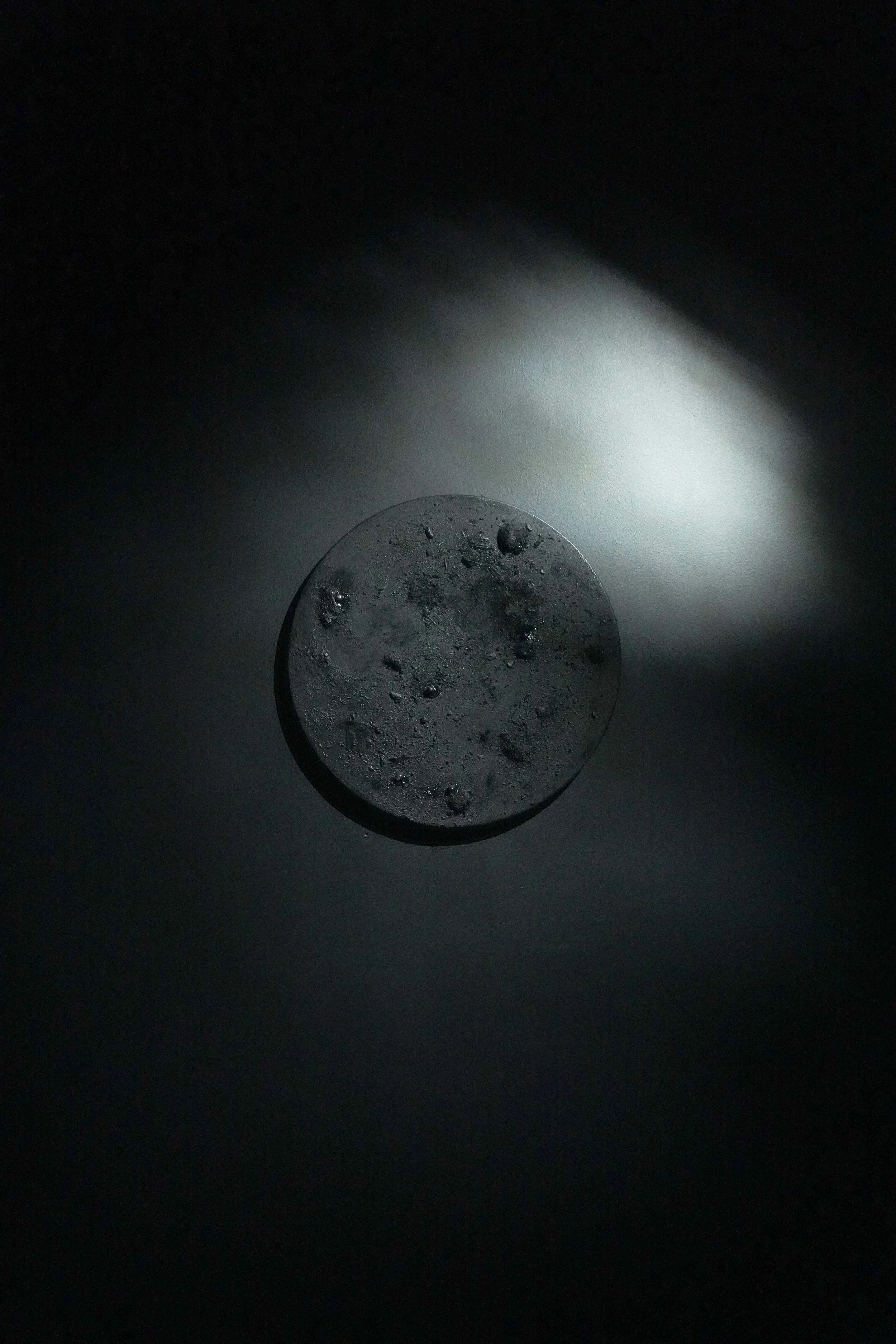
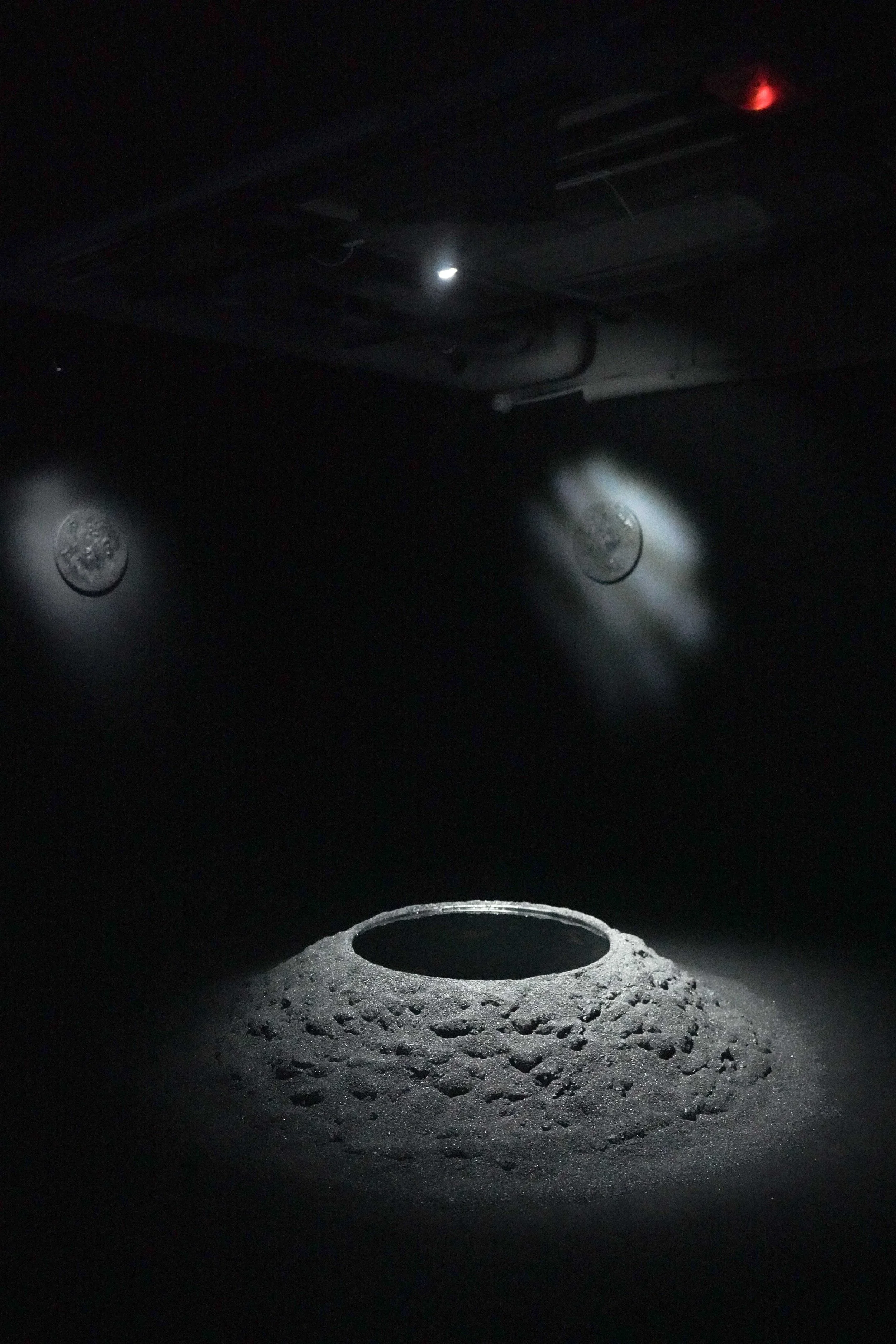
9 Void 2023 scenography
In Conversation: Joshua Serafin
Preparations are currently underway for Joshua Serafin’s solo presentation, Grieve the Departed Wounds. As we collaborate with the artist to bring their vision to life this March, we sat down with them to discuss their creative process.In this dialogue, Joshua reflects on their personal and artistic journey, unpacks the transition from live body to static object, revealing how he builds new worlds from the scars of the past.
Q: Please provide a short introduction about yourself and your works.
Hi, my name is Joshua Serafin. I'm a Filipino artist currently based in Brussels for the past 10 years, but I' been navigating both back in the Philippines and the region, as well as Belgium. My practice is solely focuses on performance and choreography, but also extends into film, installation, and sculpture and I think I would say it's a bit of multimedia where all of these different practice, I combine and create different works and what I find relevant to what the themes I am working with. I work with themes of spirituality, ecology, and queerness, and how these themes focus and centralize on the narratives that I want to build in terms of world making, but as well how to expand this narratives beyond what it's usually are and what it seems.
Q: You are translating the ephemeral energy of live performance into static objects within a gallery. Do you view these installations as 'remains' of a past event, or do they take on a new, separate life of their own once the body is absent?
They are both.
Having these objects in a space simultaneously marks the remains of a time and continues to exist on their own. They’re remnants of a performative body that lived in this space—swords I used, pieces of scenography, worn props—and those objects carry traces of choreography and action. Different materiality translate the body’s movement into something static, but that static thing still holds the history of what happened.
I’m always figuring out how to present those two states: material and immaterial, relic and proposition. I want the objects to read as autonomous works, but also to reference the performance and the essence of each piece beyond the event. They show where and how they were used or transformed, and they ask: How do we make relics of time? How do we encapsulate movement and choreography in an object? Placed in the gallery, they can suggest or propose choreography—suggesting movement physically and mentally for the viewer—even without the body present.
Q: In this exhibition, the concept of the wound expands beyond the body, becoming an atmospheric space that surrounds the viewer. How does this shift from an internal feeling to an external environment resonate with your understanding of grief? Do you view the wound as a place that one inhabits?
This concept—it really comes from a lot of the works that exist in this space. It came from deep, deep wounds and deep pain. For example, Void is a work within Cosmological Gangbang that really started from a lot of personal pain, and I tried to create—hopefully—a space of healing. For me, making this work has been a space of reconciliation. It has been a space for creating different modalities for my own healing, let’s say.
Having experienced such a depressive state when I was younger, and the accumulation of a lot of pain I’ve endured as a living body, so much of that pain comes from leaving home when I was young, from constantly moving and migrating, from being in a constant state of adaptation across different kinds of worlds. And even something as simple as heartbreak.
I guess pain is such a strong force in the act of creating. For me, it has also been a place of inspiration. These works, they are wounds. But they are wounds that have healed, wounds that have been encapsulated in time, and encapsulated within different materials and different forms. That’s kind of my initial input into this.
But I guess the question is also: how do I expand this idea of wounds? How can this exhibition be a place where experiences come together, and at the same time become a space of healing? But also a space that proposes grieving.
Do I view this as a place that one inhabits? I think we can. I think it’s actually many places where we can be. We can remain there, or we can allow ourselves to depart from that place—but we can always move in and out. I see it as a state of being, where these worlds, these emotions and experiences, become places and resources we can return to if necessary. And I think, one way or another, they will always teach us something about pain
Q: Your practice often involves the creation of new deities and cosmologies, acts of powerful imagination and world-building. How does the 'wound' fit into this process of creation? Do you view the wound as a site of destruction, or is it the necessary soil from which these new figures and myths must emerge?
"Creation and destruction are inseparable. The space in between is a particularly interesting place to inhabit."
When I created these alter egos, these spirits, it took a lot of time. It took a lot of therapy, a lot of work, and a lot of internal processes to understand what these demons—or these alter deities within me—were doing. I arrived at a point where I was confronting all these demons and personas that exist within me, and that’s where I actually met these spirits.
These spirits are characters where I realized: instead of hiding for so long—which is something we often do with our demons—maybe I needed to let them come out. For me, liberation from that pain came through allowing these alter egos to emerge. These spirits are beings I created in my mind to protect me, to absorb the pain of leaving home, the pain of loneliness, the pain of heartbreak, the pain of experiencing many horrible things throughout my life.
Being able to dance with these beings that I created, and giving them a platform to exist, has been a way for me to liberate myself from that dark realm. In that sense, I create these deities, I build these worlds, and this entire process of creation is not an escape—but a way to respond to and cope with the realities I am living in. And also the realities humanity is living in. The dystopian world we inhabit is intense, and for me, myth-making and world-building become ways of proposing a different kind of futurity—one that I hope we might be able to land in.
Do I view the wound as a flaw in the structure, or as the necessary soil from which figures and breath must emerge? For me, creation and destruction are inseparable. You cannot create without destroying, and you cannot destroy without creating. These are part of a cycle that we are constantly moving through.
I think the space in between those two realms—the in-between state—is a particularly interesting place to inhabit. In uncertainty, in process, we generate ideologies, beings, bodies, worlds, entities, and myths. Historically, this is something humans have always done, and I find that deeply beautiful. I don’t believe one can exist without the other. And I don’t see this as a simple polarity of good and bad. It’s more about multiple things emerging at the same time, in tension, in coexistence.